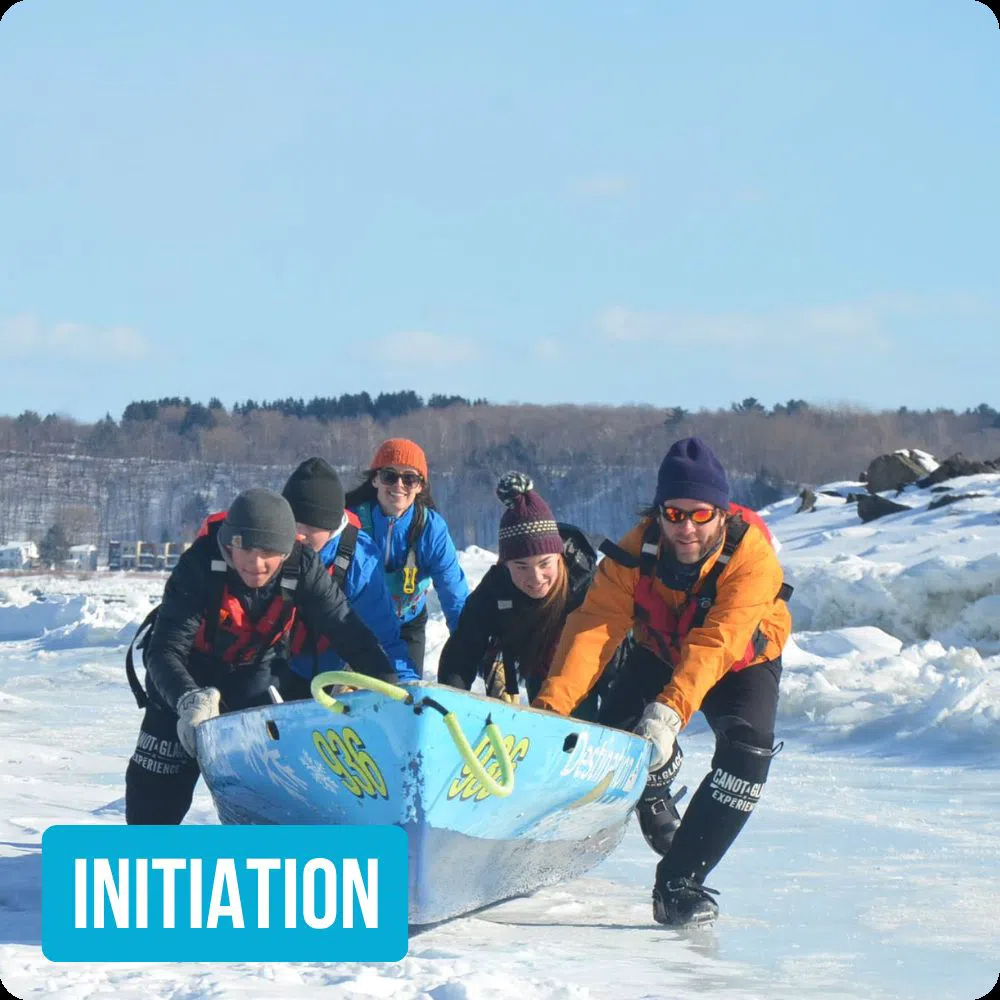

The St. Lawrence in front of Quebec City does not freeze into a sheet. It breaks into pans, the tide drags them up and down the channel twice a day, and the ice under a boat is never the same ice for more than a few minutes. Crews cross it anyway, five to a canoe, half paddling and half pushing with one leg on the floe, and you can watch from a public boardwalk for nothing or pay to be in the boat.
What you are actually looking at
For most of this city's history the river was the road, and in winter it was a road that moved. Couriers took mail and passengers across in wooden canoes because there was no alternative, reading the pans, climbing out to push, climbing back in when open water appeared. Bridges and icebreakers ended the necessity; the crossing survived as sport, and the crews racing in February are doing competitively what somebody's great-grandfather did for a wage.
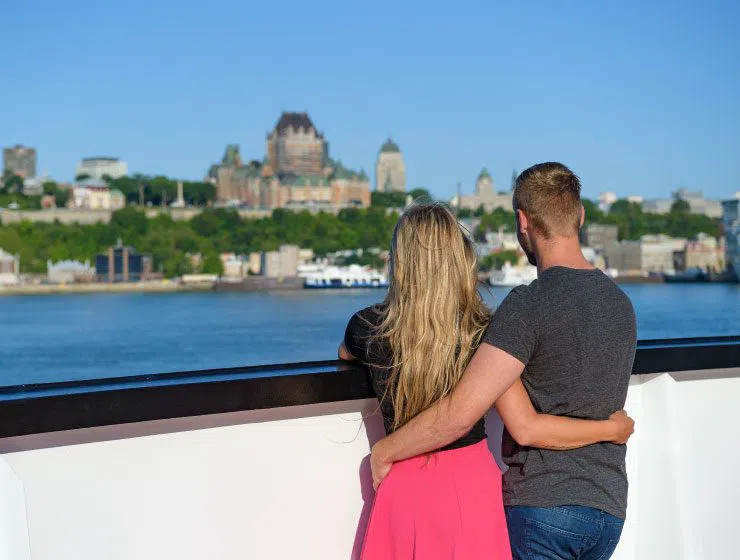
The cheapest way to understand the water is the Traverse Québec–Lévis (Basse-Ville, at the foot of the Old Port), the walk-on ferry that has never stopped running. No reservation, a few dollars each way as a foot passenger, departures every 20 to 30 minutes through the day, service roughly 06:00 to 02:20. Stand outside on the upper deck and you will hear the hull working through the pans, the same pans the canoes cross, at the same state of tide. Ice conditions occasionally disrupt sailings in deep winter, so leave slack in the day if you have something booked afterwards.
Getting into a canoe yourself
Canot à glace Expérience (Cap-Blanc, 1131 boulevard Champlain) is the only operator running year in, year out that puts ordinary visitors in the boat rather than on the shore. You start in a heated workshop under the cliff, get fitted out, and learn the two things that matter: how to set the canoe on a pan without punching through, and how to get back in when the ice gives way under one foot, which it will. Then 60 to 90 minutes on the water, finishing in a Nordic sauna and at an ice bar.
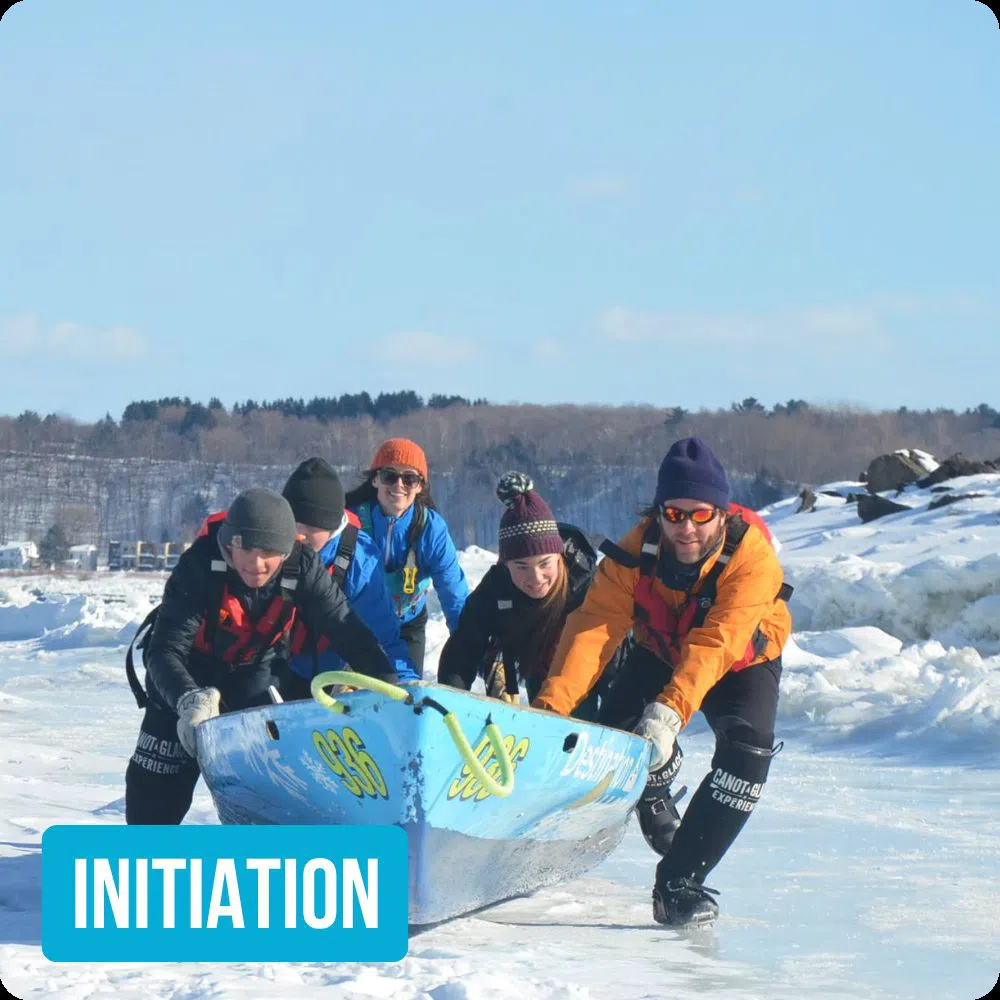
Two details decide whether this suits you. The first is that a canoe runs five up, one captain and four crew, so unless you are a party of four, you are sharing a boat with strangers and pulling your weight in front of them. A group of four books a whole canoe and gets the captain to itself, which is why the team-building package exists and why this works better for a foursome than for a couple. The family outing takes children from 4 to 11, in the same boats, with the route trimmed.
The second is that there is no fixed itinerary. The route is rewritten each morning around the tide and the state of the ice, so nobody can promise you a particular crossing, a particular view, or a particular finishing point. Take the earliest slot your day allows, because a cancellation for conditions then leaves you room to rebook.
Expect from about CA$225 per adult and about CA$145 for youth. The season runs roughly mid-December to early April, and the workshop is closed Tuesdays and Wednesdays. That catches people out, because those are exactly the quiet midweek days visitors try to fill.
The version with your feet on the ice
If a crossing is more than you want, Village Nordik du Port de Québec (Vieux-Port, Bassin Louise) sets up on the ice in the middle of the old harbour and hands you the shallow end. Ice fishing with all the gear and guidance supplied, ice canoe initiations, a sugar shack, giant igloos, and a heated zone to retreat into. It runs Friday to Sunday only, from late January to early March, which makes the school-break weekends busy, so book those ahead. Wandering the site costs nothing; the activity packages are moderate. For families with children too young for the river, it is worth a morning in its own right.

Five races, and which to build the trip around
Course en canot à glace du Carnaval de Québec (Pointe-à-Carcy, Vieux-Port) is the oldest and the loudest, and the one worth planning dates around. It next runs on 7 February 2027, inside Carnaval de Québec (5–14 February 2027), launching from wharves 19 and 21. Watching from the quays is free and unticketed, so any size of group can simply turn up. The VIP package, around CA$55 plus tax, buys ferry access, a heated room, an open bar and live music, which sounds like an upsell until you have stood still at −20°C for two hours. The enclosure is capacity-limited and sells out; book it well ahead or not at all.
La Grande Virée des canotières et canotiers (Sainte-Foy–Sillery on the north shore, Lévis on the south) is the race designed around the people watching it. Elite crews run laps plus a return leg, crossing and recrossing in front of you, so you can follow almost the whole course from one spot: the Juvénat Notre-Dame on the south side, or Quai Frontenac on the north. Free, no ticketing, open shoreline on both banks. It is a late-February fixture and ran on 28 February in 2026; expect the next edition in the same window, and confirm the date before you commit a weekend to it.

Course Tigidou (Île d'Orléans, marina at 100 chemin du Quai) is the newest stop on the circuit and the smallest, the first big ice canoe race held on the island. Late February, thirty minutes from downtown, free and open-air at the marina. The crowd is village-scale, which means you get far closer to the launch than at Pointe-à-Carcy, and the maritime-heritage setting gives you something other than a hotel roofline behind the boats in your photographs.
La Grande Traversée (Isle-aux-Coudres, Charlevoix) still carries its origin story. The 8 km course crosses to the north shore, where crews collect a symbolic mail sack, re-enacting the winter postal couriers. Free viewing from three shoreline points, and the scheduled ferry lets a group follow the boats from the water for the standard fare, no charter needed. It sits about 100 km from the city, so treat it as a Charlevoix day trip with a long drive at both ends. Note that the separate guided-outing business on the island has paused, so come for the race and do not count on paddling there.
Festival de la banquise (Portneuf, about an hour west) closes the circuit, and it runs over two days rather than a single afternoon. Around 42 crews race a 6.5 km round trip between Portneuf and Pointe Platon, watched from the town dock. Early March, free, family-oriented, and the least logistically demanding of the regional races for a large group.
Where to stand
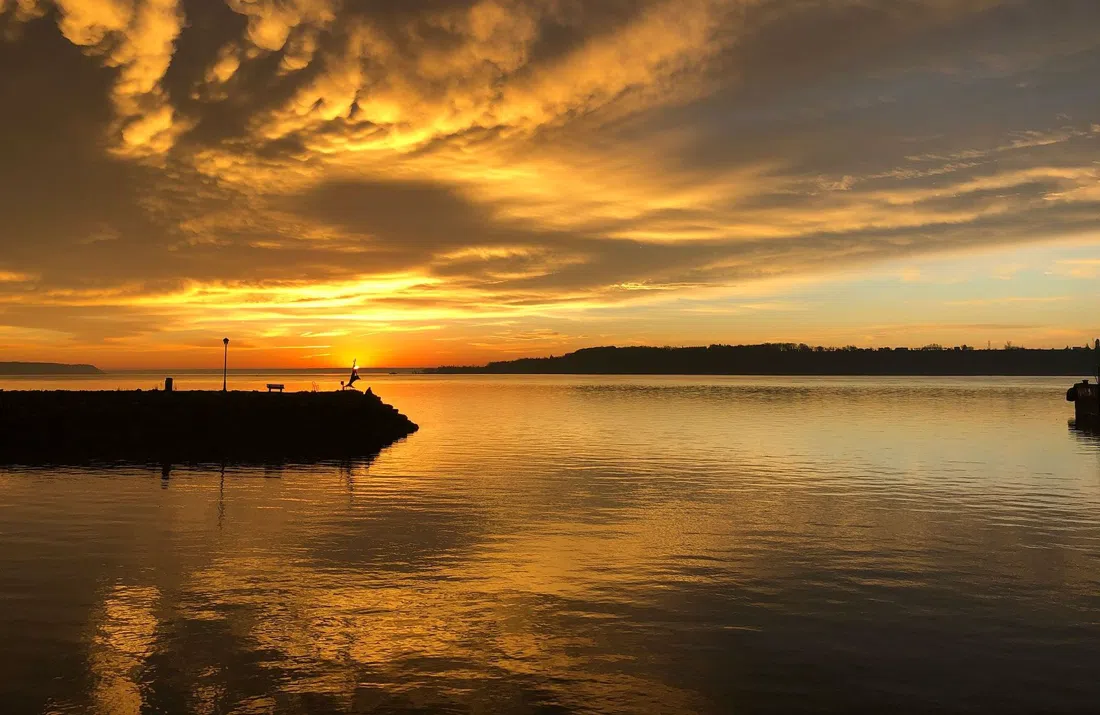
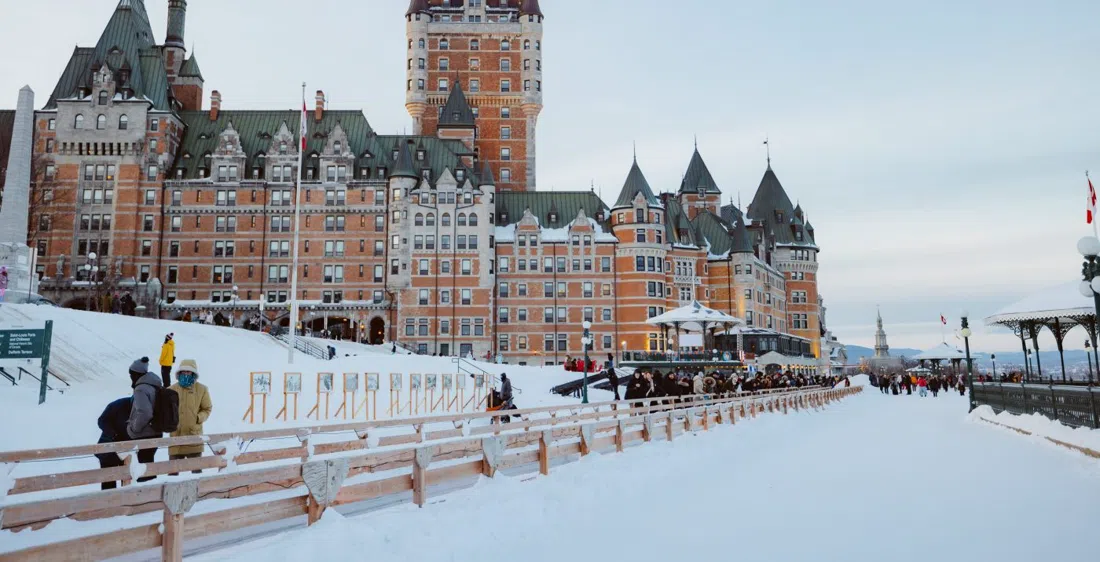
Terrasse Dufferin (Vieux-Québec, Haute-Ville) is the natural grandstand, a public boardwalk 82 m above the water, directly over the stretch the Carnaval crews race. Free, open at all hours, no group limit, and no shelter at all. Come up from Place d'Armes, take the rail on the river side, and accept that the wind arrives straight up the channel with nothing to slow it. Twenty minutes here is a different proposition from twenty minutes in the Old Town streets behind you.
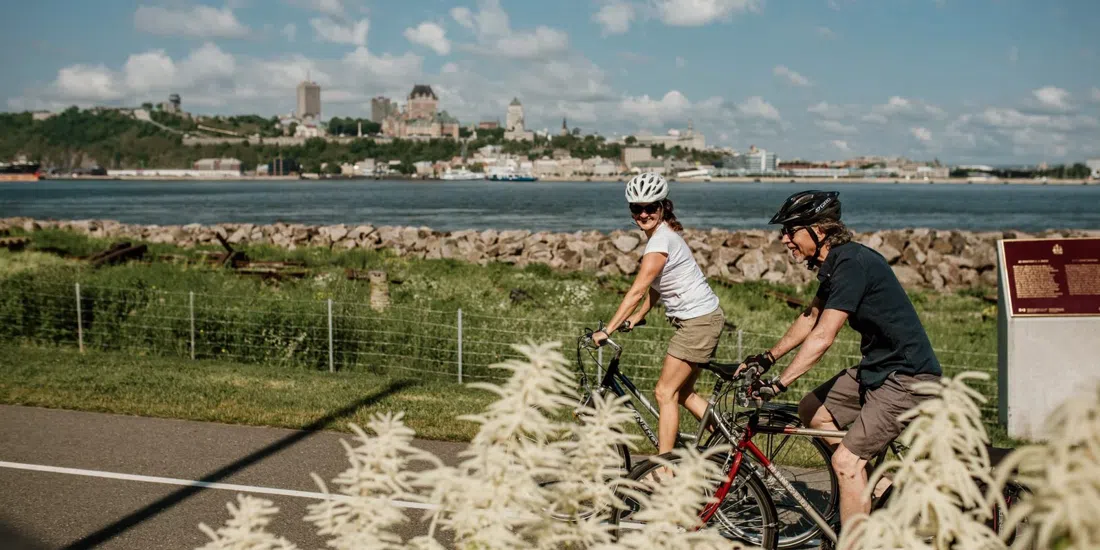
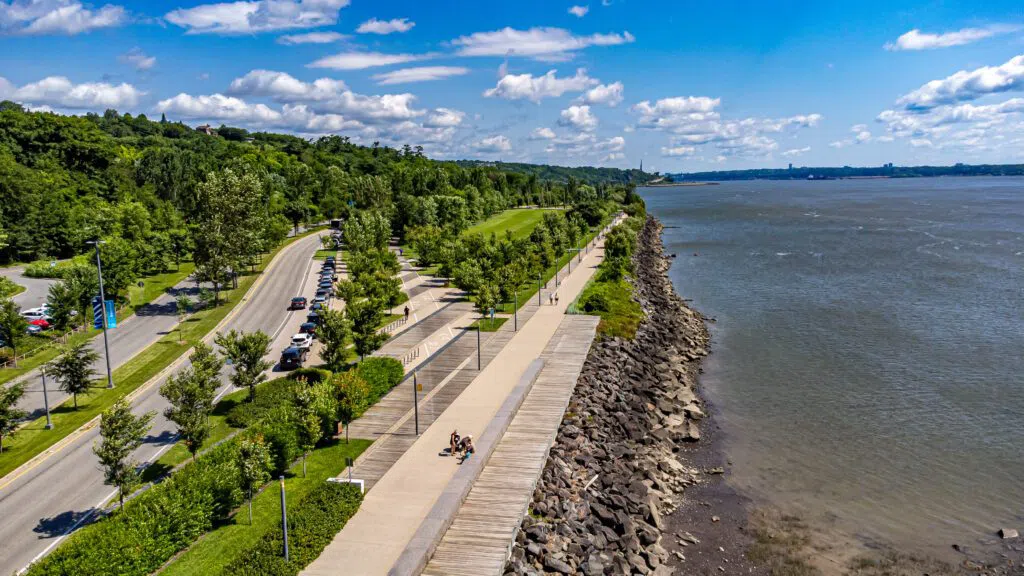
Parcours des Anses (Lévis, south shore) is the opposite view: fifteen kilometres of cleared, groomed path facing the walled city across the ice, free, no booking, no limit. It has become the default south-shore vantage now that the riverside section of Quai Paquet is closed indefinitely for structural repairs, with no reopening date announced. Ride the ferry across, turn along the path, and you are looking back at the skyline that sits behind every photograph of the race.
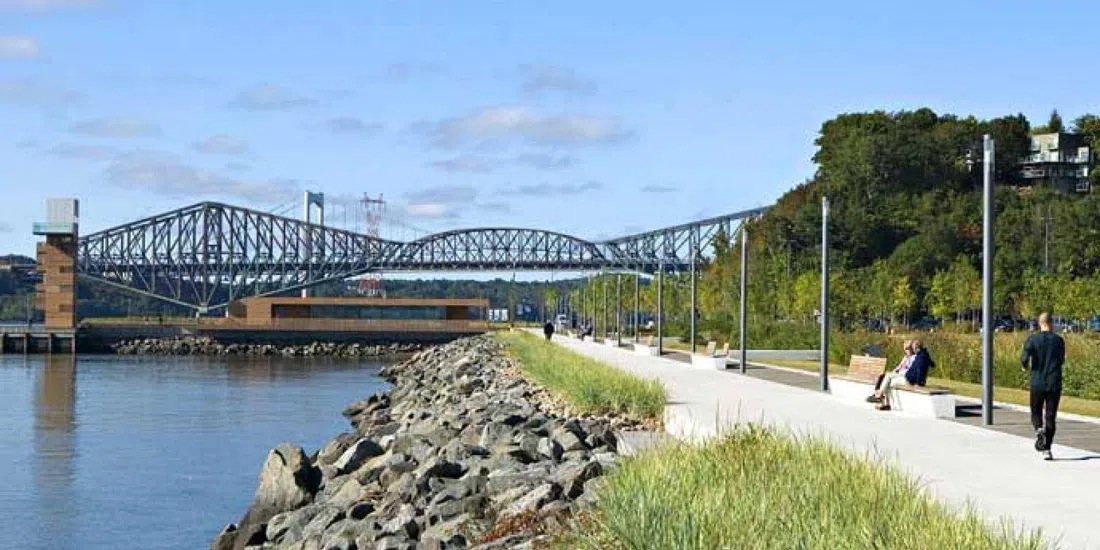
Promenade Samuel-De Champlain (Sillery) is where La Grande Virée finishes on the north bank, at Quai Frontenac, and a groomed riverside walk the rest of the season. Open daily 7 a.m. to 11 p.m. year-round, with parking and a welcome centre, so it is the practical choice if your group needs a warm room within a short walk. Note that the Quai des Cageux observation tower closes in winter; the ground-level quays are the vantage point.
Observatoire de la Capitale (Colline Parlementaire) is indoors, warm and ticketed, open daily 10 a.m. to 5 p.m. From 221 m you can see the whole geography of the crossing at once: the channel, the two shores, and why the river here breaks into moving pans instead of setting solid. Keep it in reserve for the afternoon when the wind off the water defeats everyone, which is most afternoons.

Rooms above the course, and a second act
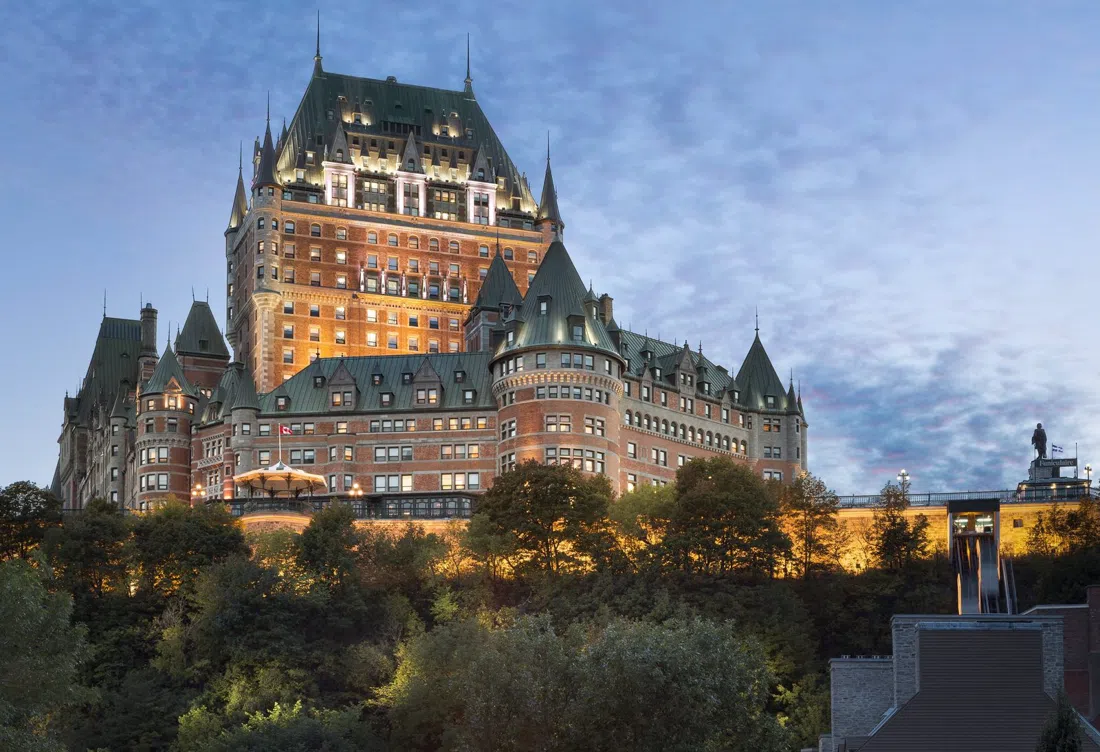
Fairmont Le Château Frontenac (Vieux-Québec) is the building in every photograph of the race, and the one place you can watch the crossing from a warm room directly above it. River-view categories are limited and go first, and rates climb sharply across the Carnaval fortnight, so book that category specifically and book it early. It runs a full group, wedding and corporate operation, so a large booking is routine rather than awkward. If the river-view rooms have gone or the February rates do not work, compare what else sits inside the walls with a Quebec hotel search before you widen the map.
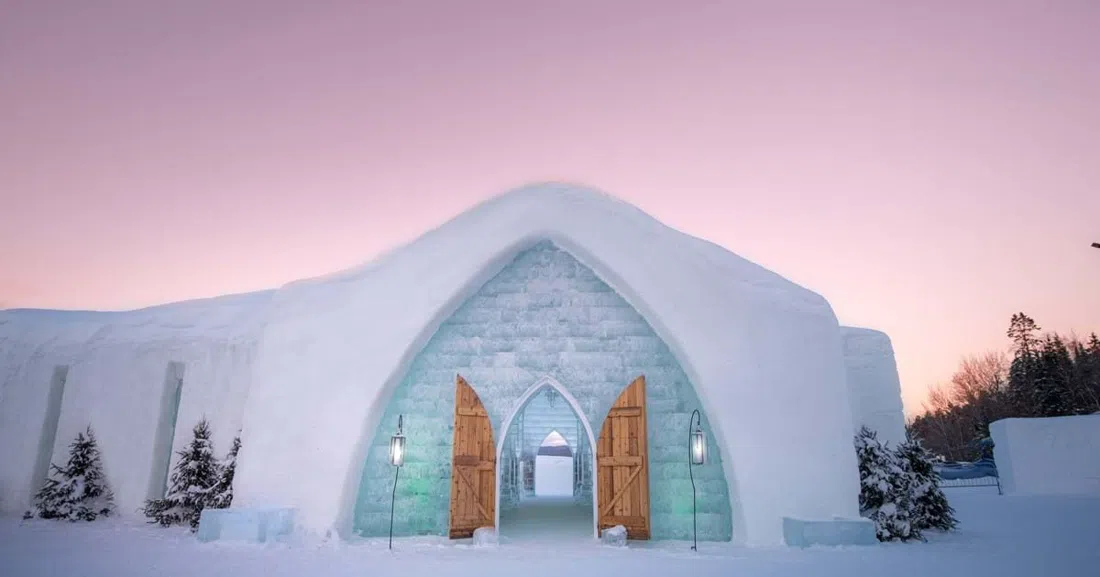
Hôtel de Glace (20 minutes north of the city) is the obvious second act for anyone who came for the race, open 4 January to 13 March 2027, with the 2027 edition built in partnership with Indigenous Tourism Quebec and Tourisme Wendake. Day tours are modestly priced, an overnight is a premium splurge, and both take groups. Be clear with yourself about what it is: snow-and-ice architecture, not the river. Book early, because the season is short and it books out.
Au 1884 – Les glissades de la Terrasse Dufferin (Haute-Ville, on the terrace itself) fills the hour between arriving and the start gun. Three ice lanes, a 152 m run, toboggans that reach up to 90 km/h and seat four, so a group of six splits across sleds. It has operated on this terrace since 1884 and pairs with the race for the same reason the race exists: the city will not go indoors for four months. Presale opens 1 November, it runs mid-December to late March, and the Carnaval fortnight sells out.
Practical notes
Timing. The circuit runs from the Carnaval race in early February through to Portneuf in early March, with La Grande Virée and Course Tigidou in the last week of February. A single long weekend covering the Carnaval race and one regional race is realistic; three races means a car.
Transport. Everything inside the walls is walkable, and the ferry handles the south shore for a few dollars. Île d'Orléans, Portneuf and Isle-aux-Coudres need a car with winter tyres, legally mandatory in this province from December to mid-March and fitted as standard on any rental picked up locally.
Money. Prices here are Canadian dollars. Watching costs nothing at every race on this list. A full day runs to about CA$225 for a paddle, CA$55 plus tax for the Carnaval VIP enclosure, a few dollars each for the ferry and the toboggan run, and a modest admission at the Observatoire. Cards are taken everywhere; carry a little cash for the smaller village events.
Clothing. Drysuits come with the canoe; nothing else does. Assume −20°C with wind, bring more insulation than the temperature alone suggests, and cover your face. Every venue on this list except the Observatoire is outdoors.
For the rest of the city, where to eat after a day on the ice and what is worth doing when the river closes in, start with the Quebec guide.