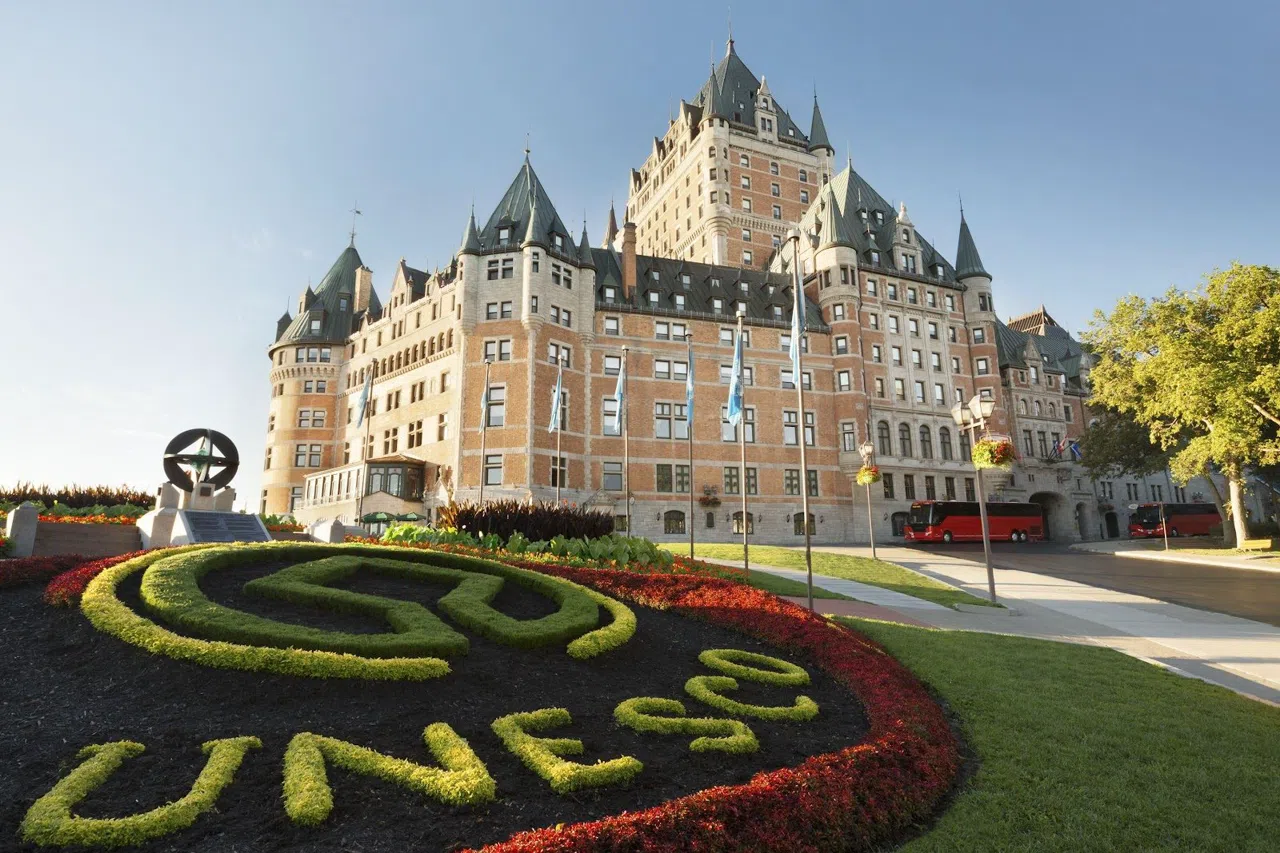

Nine hundred feet above the St. Lawrence, a green copper roofline decides where every eye in Quebec City lands first. The Château Frontenac has been doing that since 1893, and it has never let the postcard version of itself get in the way of running as an actual hotel — check-ins, ballroom load-ins, a housekeeping staff the size of a small town, all behind a façade that fooled Alfred Hitchcock into shooting a film here and looks, from the boardwalk below, close enough to a fairy tale that visitors forget people are sleeping there tonight. This is a guide to the building itself: who stays, who can't get near it during a wedding, and which nearby addresses tell the same three-hundred-year story for a fraction of the price.
The Château Itself: A Hotel First, a Landmark Second
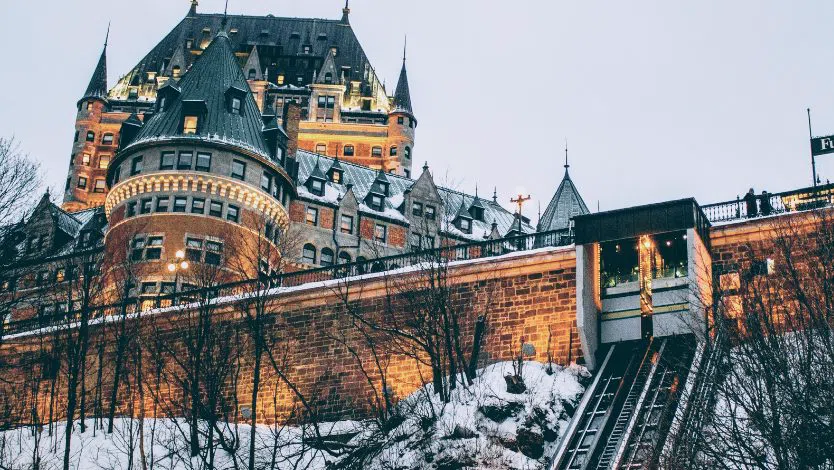
Fairmont Le Château Frontenac (Upper Town, Vieux-Québec) opened in 1893 as a Canadian Pacific Railway château-hotel, one of a chain the railway built to put its passengers somewhere worth the fare. It has been added to since — the central tower that finished the current silhouette went up in 1924 — but the bones are the same building that hosted Franklin Roosevelt and Winston Churchill during the 1943 and 1944 Quebec Conferences, where Allied war strategy was argued out over these same corridors, and that Hitchcock used as a location for I Confess in 1953.
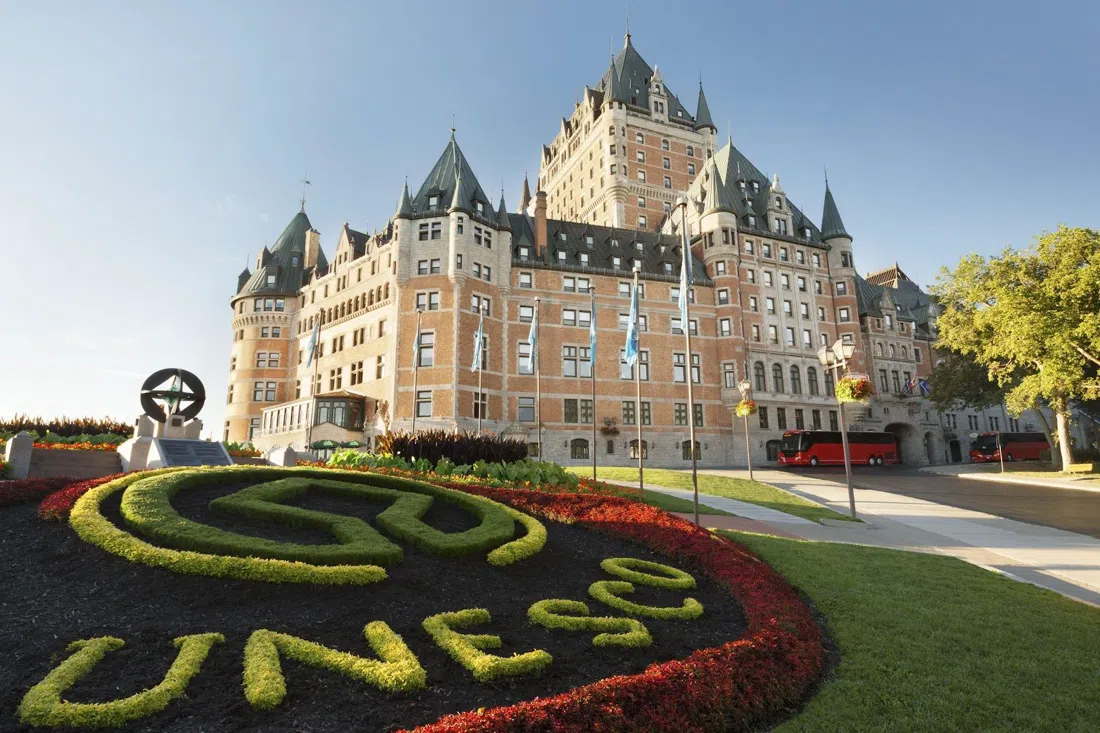
None of that history has turned it into a museum piece. Rooms run roughly CAD $400 to $1,200-plus a night depending on season and whether you're paying for a St. Lawrence view or a courtyard one, and the gap between those two numbers is real — a river-view room in July costs meaningfully more than the same category facing the inner courtyard, and it's worth asking directly at booking rather than assuming "Château view" means what you think. The hotel's ballrooms and event floors are core business, not an afterthought: weddings and conferences hold large blocks of rooms through the season, so a lobby that looks serene on a Tuesday morning can be a receiving line on a Saturday afternoon. If you want the building without the wedding party, a weekday stay outside peak summer and Winter Carnival (early February) is the reliable way to get it. For rates across the season and what's actually free on your dates, the Quebec hotel search is faster than guessing from the hotel's own calendar.
It suits travellers who want the landmark itself as the experience — the corridors, the turrets, the fact that you can walk out the front door directly onto the boardwalk everyone else paid nothing to stand on. It does not suit anyone chasing boutique intimacy; with 611 rooms and a full events calendar, it runs at hotel scale, not inn scale.
Getting Under the Postcard: The Terrace and the Funicular
Terrasse Dufferin sits directly at the Château's foundations, a wooden boardwalk built out over the cliff with the St. Lawrence spread out below and the Laurentians on the far shore on a clear day. It's free, open to anyone, and takes large groups without friction — no booking, no gate. This is the shot on every postcard of the hotel, taken from below and slightly to the side so the whole roofline fits in frame, and it's worth doing at both ends of the day: morning light on the copper, and again at dusk when the windows start lighting up floor by floor. In winter a toboggan run operates off the terrace for roughly CAD $4–5 a ride, genuinely fast and genuinely worth ten minutes if you're already there in the cold.
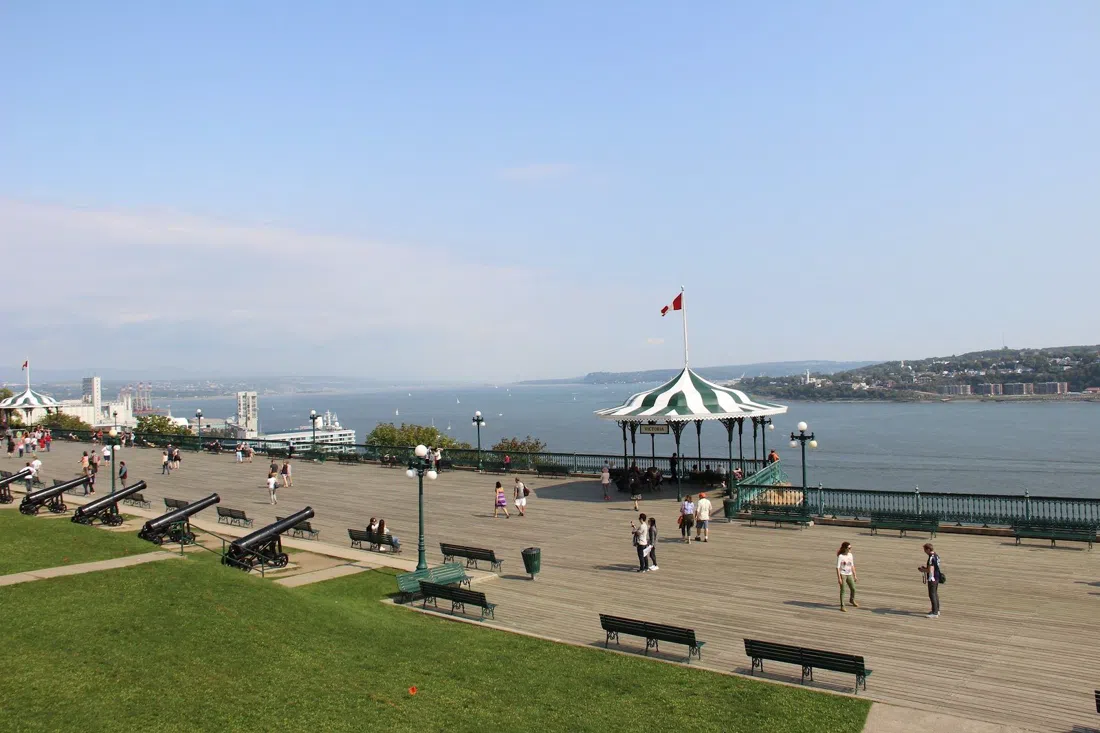
From the terrace, the Funiculaire du Vieux-Québec has been running since 1879 and is still the honest way down to the old port rather than a novelty add-on — a two-minute descent that replaces a steep staircase and drops you into the Quartier Petit-Champlain at the bottom of the cliff. One-way fare is about CAD $4.75, with group and school rates available, and it operates year-round. Skip it only if you specifically want the walk; otherwise it's the fastest, least strenuous link between the Château's front door and Lower Town.
War Rooms and Ramparts: The 1943–44 Quebec Conference
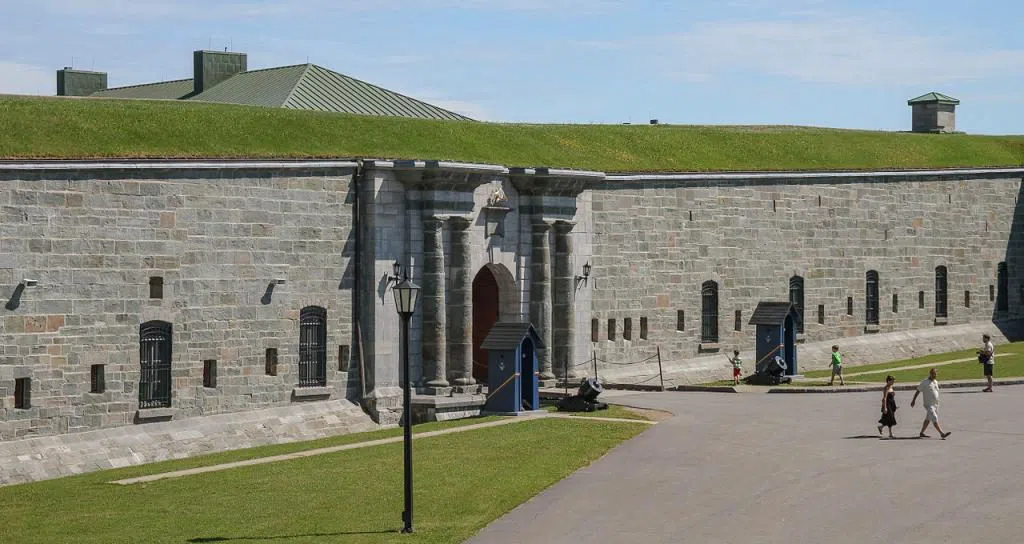
A five-minute walk along the cliff from the hotel, Citadelle de Québec is the other half of the Château's wartime story and still an active military installation — home to the Royal 22e Régiment, not a preserved-in-amber fort. General admission runs about CAD $20, and guided tours operate year-round, built for tour groups and school trips rather than a self-guided wander (parts of the site are only accessible with a guide). This is where Churchill and Roosevelt actually moved between meetings during the 1943 and 1944 Quebec Conferences, the Château hosting the delegations and the Citadelle providing the fortress backdrop for the diplomatic photographs — the two buildings are, in a real sense, one story split across two addresses. If you're doing the Château for its history rather than just its silhouette, the Citadelle is the site that gives that history somewhere to stand.
The Honest Alternatives: Old Quebec's Other Historic Beds
The Château is not the only hotel in Vieux-Québec with a real past, and for travellers priced out of it — or simply looking for something the Château's scale can't offer — three addresses nearby are worth naming plainly.
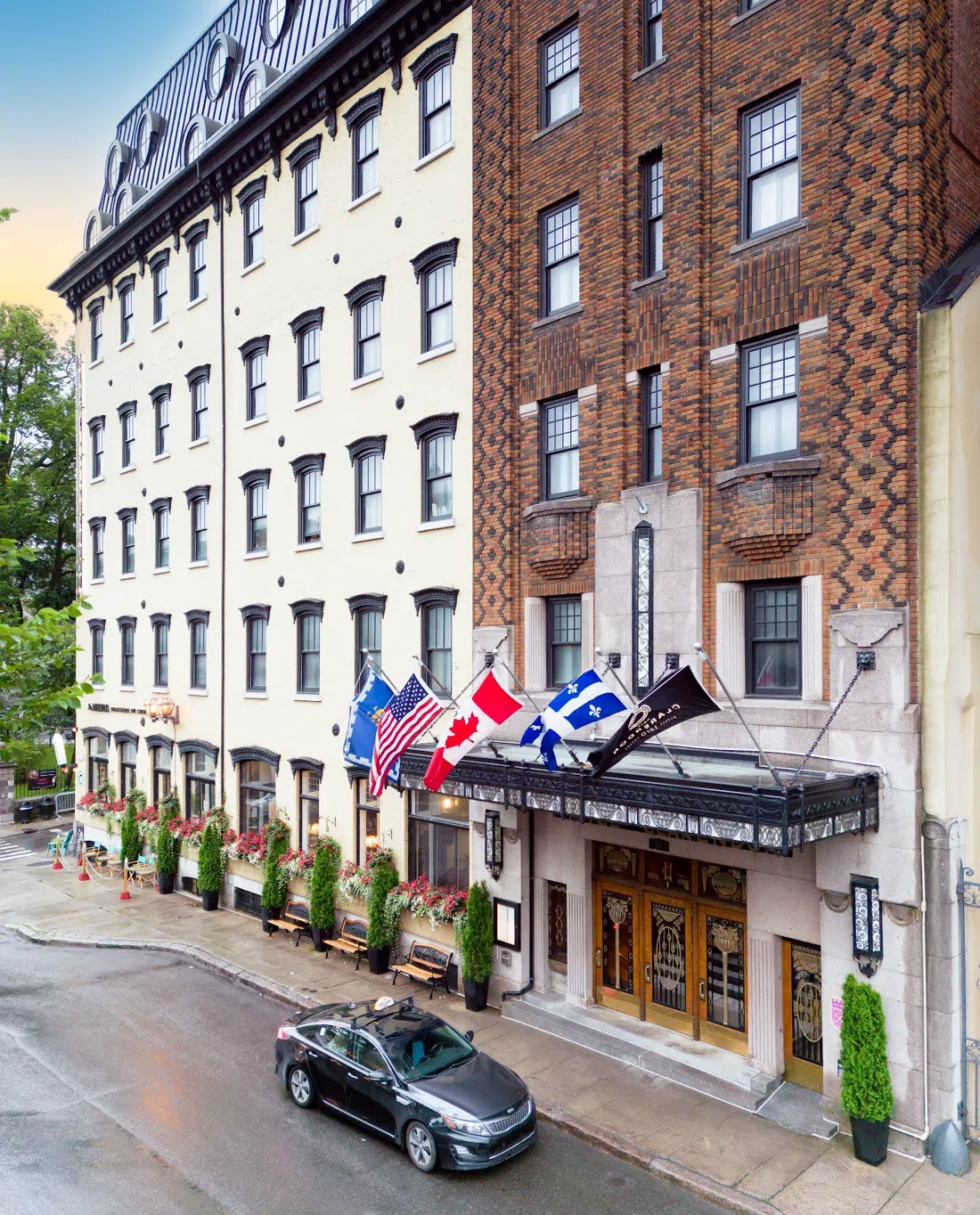
Hôtel Clarendon, on the same short walk through Upper Town, has been operating continuously since 1870, which makes it the oldest hotel still running in the city — older than the Château by 23 years, even if it's never had the marketing budget to match. It takes groups and events across its 144 rooms, and rates run roughly CAD $150–300, well under half the Château's opening price. It's the honest counterpoint: real history, working hotel, none of the scale or the crowds.
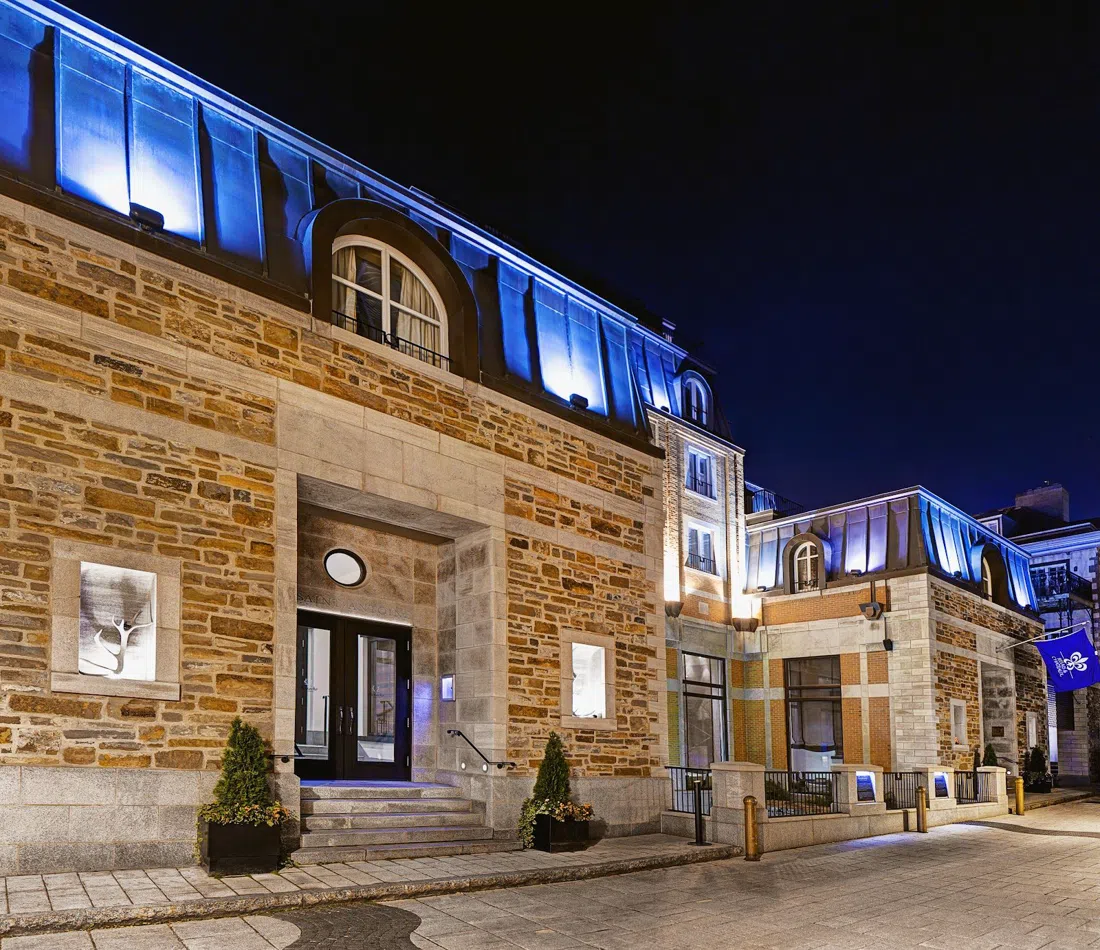
Down in the Old Port, Auberge Saint-Antoine takes a different approach to the same idea — the hotel was built with more than 5,000 excavated artifacts from the site worked directly into its walls and display cases, so the building's own construction history is on show rather than told secondhand. It's small, 95 rooms, rates around CAD $350–600, and it takes small groups only; this is not a venue for a 40-person tour bus, and the hotel is better for it. Couples and small parties who want a genuine history angle without Château-scale crowds should look here first.
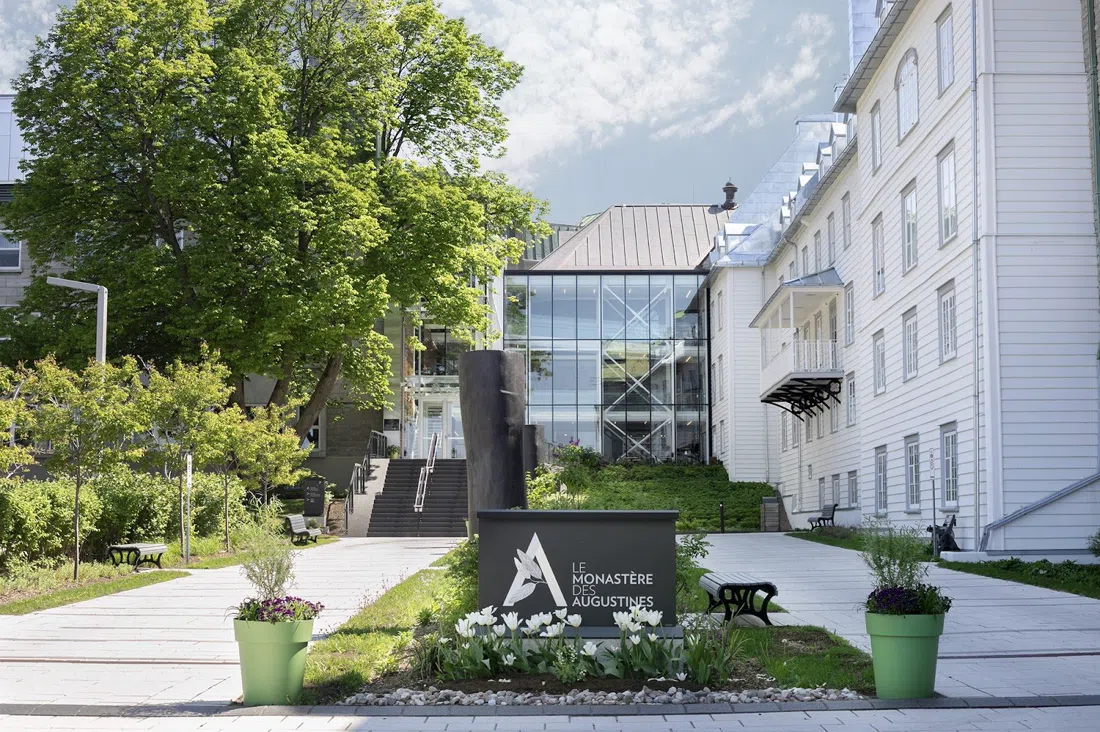
Quieter again is the Monastère des Augustines, a 17th-century working monastery converted into a hotel-museum-spa, added to the Michelin Guide in 2025. Rooms run roughly CAD $150–250, and the hotel hosts small wellness retreats and groups — deliberately not a party venue, and anyone arriving expecting a lively bar scene has misread the building. It's the quietest possible contrast to the Château's grandeur, and worth choosing specifically for that contrast rather than as a fallback.
Three Centuries Stacked in One Room: The Morrin Centre
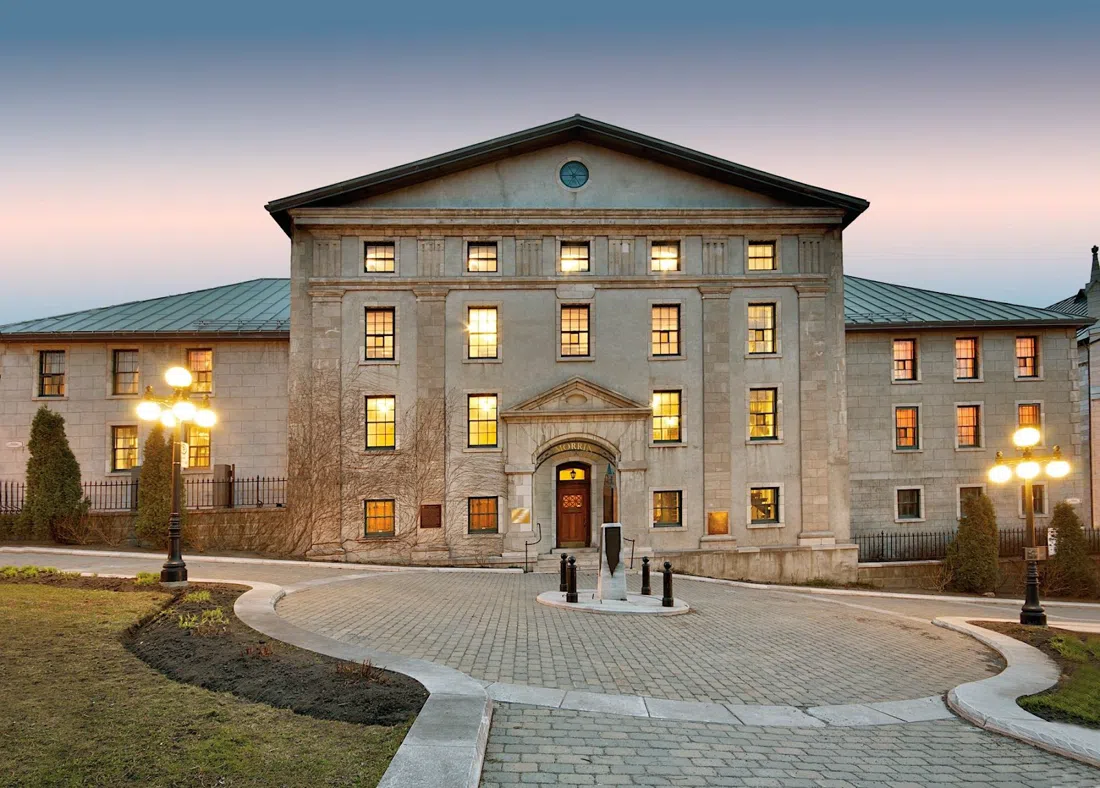
Five minutes from the Château, the Morrin Centre is a former prison that later became one of the city's oldest libraries, and it still functions as both — a working English-language library operating inside cell blocks and courtrooms that are largely unaltered. Guided tours run about CAD $16–18 and take groups comfortably. It's a strange, small building compared to the Château's scale, but it packs three distinct centuries of institutional use — incarceration, then education, then heritage tourism — into rooms you can cross in a few dozen steps, which makes it one of the more efficient history stops in Old Quebec if you only have an hour to spare between bigger sights.
Planning the Visit
Transport: Old Quebec inside the walls is compact and walkable; you won't need a car for anything covered here, and cobblestones make wheeled luggage a poor idea on the steeper streets. The funicular handles the one genuinely steep connection, between the Château/terrace level and the Old Port. Quebec City's airport (YQB) is about 20–25 minutes from the old town by taxi or rideshare.
Cash: Cards are accepted everywhere covered in this guide, including the Citadelle's ticket booths and the funicular. Keep a little cash for smaller vendors around the Petit-Champlain area at the bottom of the funicular, where card minimums occasionally apply.
Timing: Winter Carnival (early February) and July–August are the two periods when the Château's room rates and the city's crowds both peak — book the hotel itself months out if you want a view room in either window. The Citadelle's guided tours and the toboggan run at Terrasse Dufferin are seasonal in the reverse direction: the run is a winter-only draw, and Citadelle tours are easiest to catch May through September. For general trip planning across the city beyond this one building, the Quebec guide covers the wider picture.
Budget: Old Quebec's historic-hotel spread runs from roughly CAD $150 (Clarendon, Monastère des Augustines) to CAD $1,200-plus (a peak-season Château river view), with Auberge Saint-Antoine sitting in between. None of the sights in this guide beyond the hotels themselves cost more than about CAD $20 — the Citadelle, the funicular, and the Morrin Centre tour together run under CAD $45 for a full day of the Château's actual history, whether or not you ever sleep inside it.