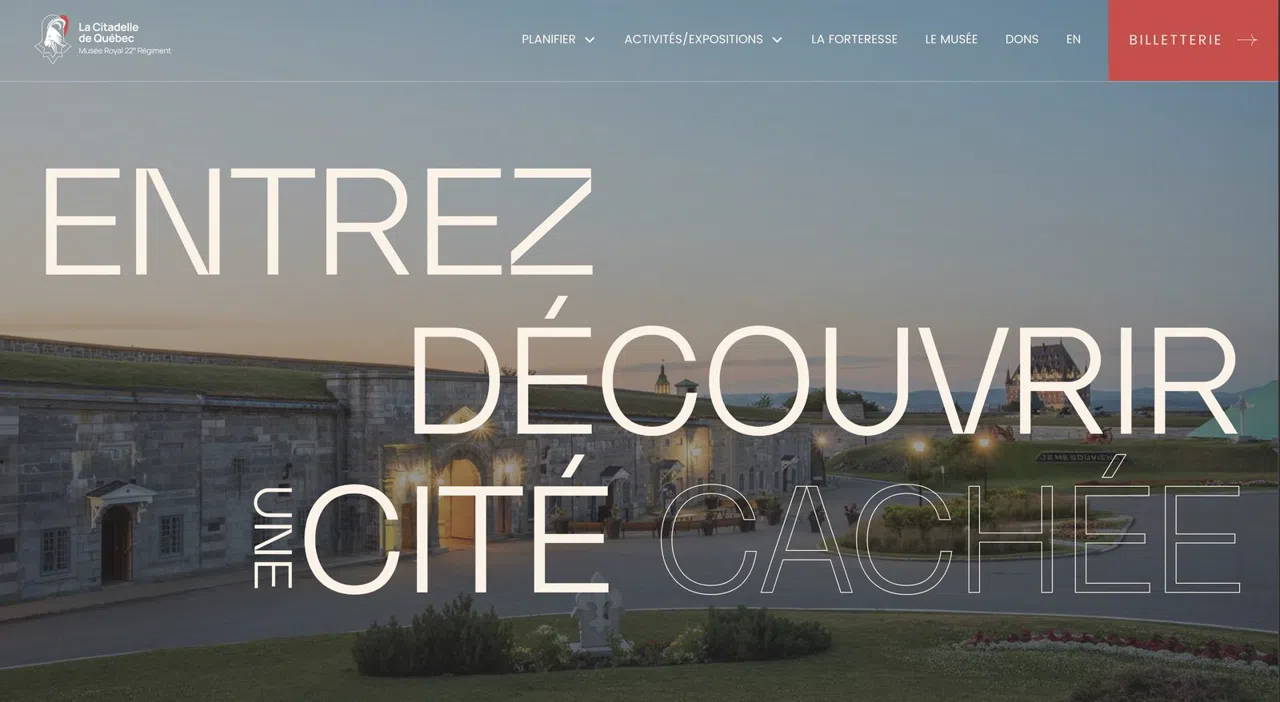

Walk out through Porte Saint-Louis (the western gate where Grande Allée meets the old city) at dusk and the limestone above the arch is still warm from the day's sun. Québec City is the only walled city north of Mexico, 4.6 kilometres of fortification wrapped around a promontory that has been defended, in one form or another, since 1608. None of it is reconstruction built for the tourist trade — every gate, bastion and casemate here did actual military work, some of it as recently as the 1970s.
The Citadel: Where the Wall Becomes a Fortress
La Citadelle de Québec (the star-shaped fort crowning Cap Diamant, the wall's southern high point) is the largest still-garrisoned fort in North America, and it remains a working military base — the Royal 22e Régiment, the Van Doos, is billeted inside it today. Standard admission is $22 CAD for adults and $20 CAD for seniors and students, and it buys a 60-minute guided walk through the fort plus entry to the Royal 22e Régiment Museum. Between June 24 and Labour Day 2026, the daily Changing of the Guard runs at 10am, with the regimental band Musique en Rouge playing the parade square — arrive twenty minutes early if you want a sightline that isn't three rows of shoulders deep. Group tickets and private group bookings are handled routinely; this is one of the few sites in the old city built to absorb a coach tour without feeling it. Couples get the same tour as everyone else, so if you want quiet, come on a weekday morning outside the guard-ceremony season.
Inside the Stone: Ramparts and the Arsenal
Most of what you see walking the wall from outside is just that — a wall. The only way to get inside the sealed casemate and the powder magazine is the Fortifications of Québec National Historic Site's Ramparts Walking Tour (Parks Canada, departing the Frontenac Kiosk on Terrasse Dufferin), which runs June 19 to October 12, 2026, at fixed start times through the day. It costs $16–18 CAD for an adult and is genuinely small-group friendly — Parks Canada caps numbers so the casemate doesn't turn into a queue — and private or group bookings are available if you want your own slot. Book ahead in July and August.
A ten-minute walk north along the wall, Parc-de-l'Artillerie National Historic Site (built directly into the fortifications near Porte Saint-Jean) is the arsenal that kept this garrison armed from the French regime through to the 1970s — an unusually long working life for a military site anywhere on the continent. It runs June 19 to September 7, 2026, with daily guided tours at 1pm in French and 2:30pm in English, and admission is $4–13 CAD, or included if you're carrying a Parks Canada multi-site pass. It suits groups fine, though tour size is naturally capped by the old workshop rooms — arrive for the start time rather than dropping in mid-tour.

Underfoot: What's Buried Beneath the Terrace
Everyone who walks Terrasse Dufferin walks over the Saint-Louis Forts and Châteaux National Historic Site (the archaeological crypt directly beneath the boardwalk) without knowing it's there. This is the buried seat of 200 years of colonial government, excavated and opened for small guided tours on the hour, May 16 to October 11, 2026. Entry runs about $13 CAD, with combo pricing if you're pairing it with other Parks Canada sites. It's a hard tour to do comfortably with more than a handful of people at once — book the earliest slot you can if you're travelling as a couple and want the site to yourselves for a few minutes.
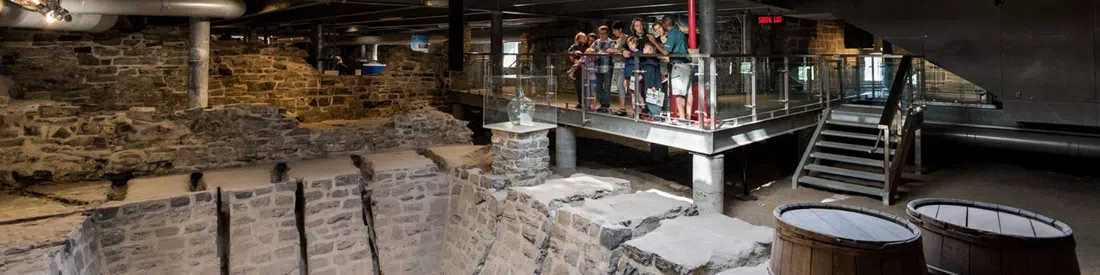
Above ground, Terrasse Dufferin and the Crimean Cannons (the promenade running along the clifftop from the Château Frontenac to the Citadelle) cost nothing, need no booking, and take any size of group — it's open public space, 24 hours a day, year-round. This is also the best vantage point in the city to photograph the wall's river-facing batteries, and at sunset the light comes in low across the St. Lawrence and does most of the work for you.
The Four Gates
Old Québec has four surviving gates, and none of them charge admission — they're functioning parts of the street grid, not attractions behind fences, so bring the camera and just walk.
Porte Saint-Louis is the grandest of the four, a Dufferin-era rebuild from 1878 replacing the original 1690s gate. It's the standard photo stop on any walking tour of the walls, open-air and unlimited for groups.
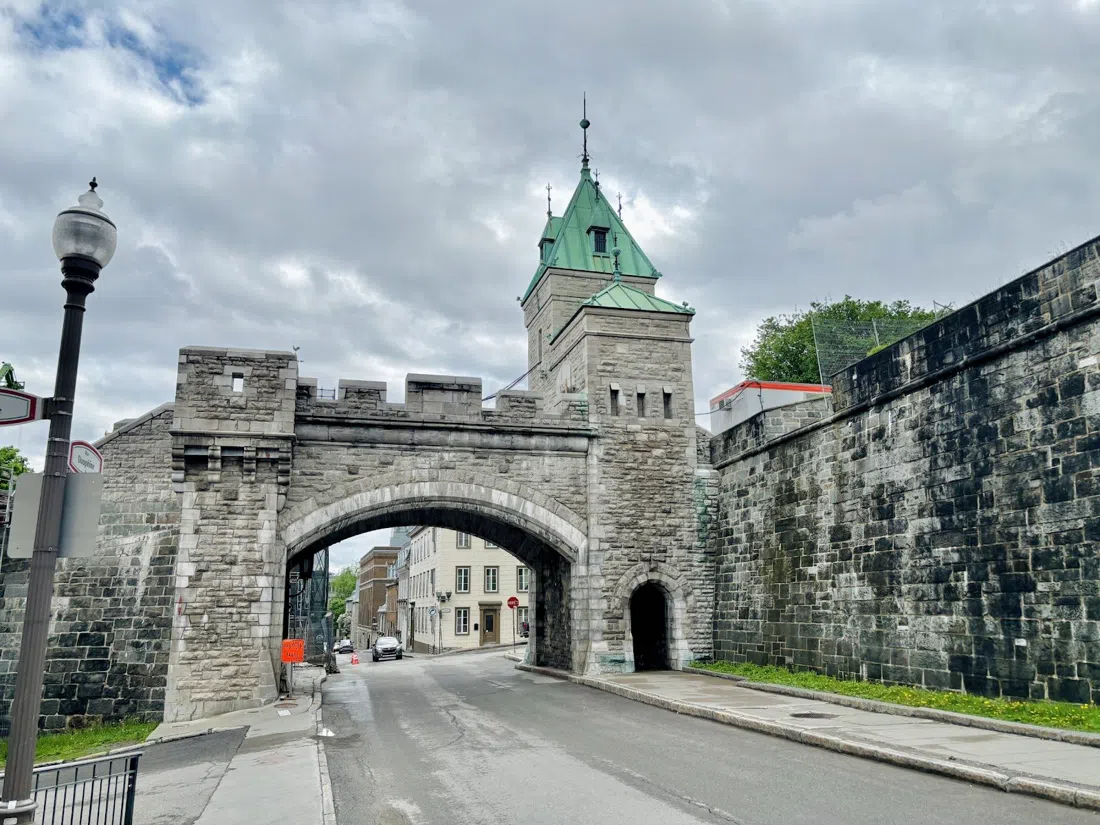
Porte Saint-Jean (on rue Saint-Jean, leading out to the faubourg of the same name) looks similar in style but is newer than it appears — the current structure dates to 1939, rebuilt to match the Dufferin restoration aesthetic of the other gates rather than any older original.
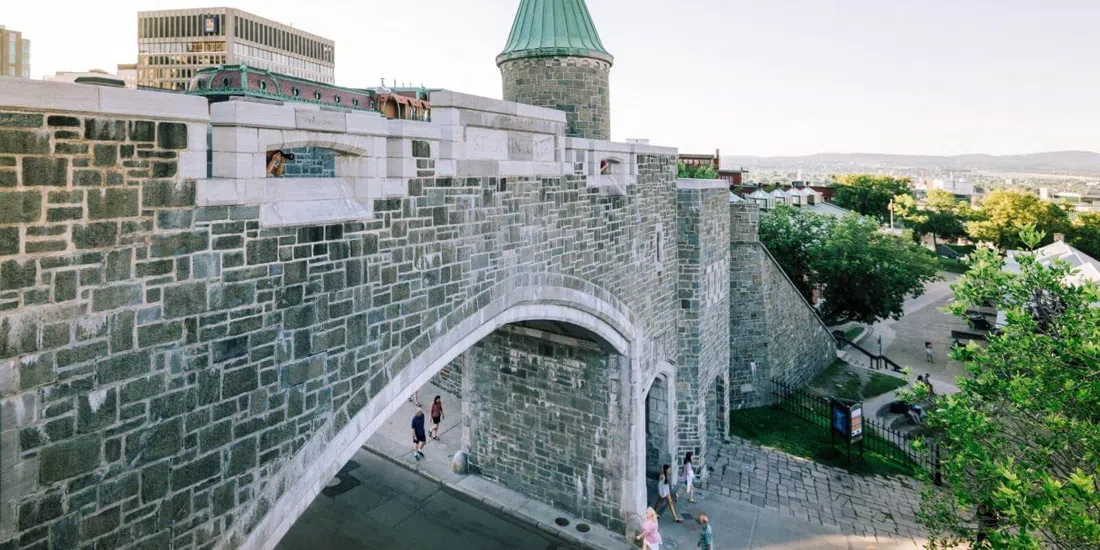
Porte Kent (on the wall's western stretch, near the Hôtel du Parlement) went up in 1879, part of the same beautification project under Governor General Lord Dufferin that saved the walls from the demolition planned for them a decade earlier.
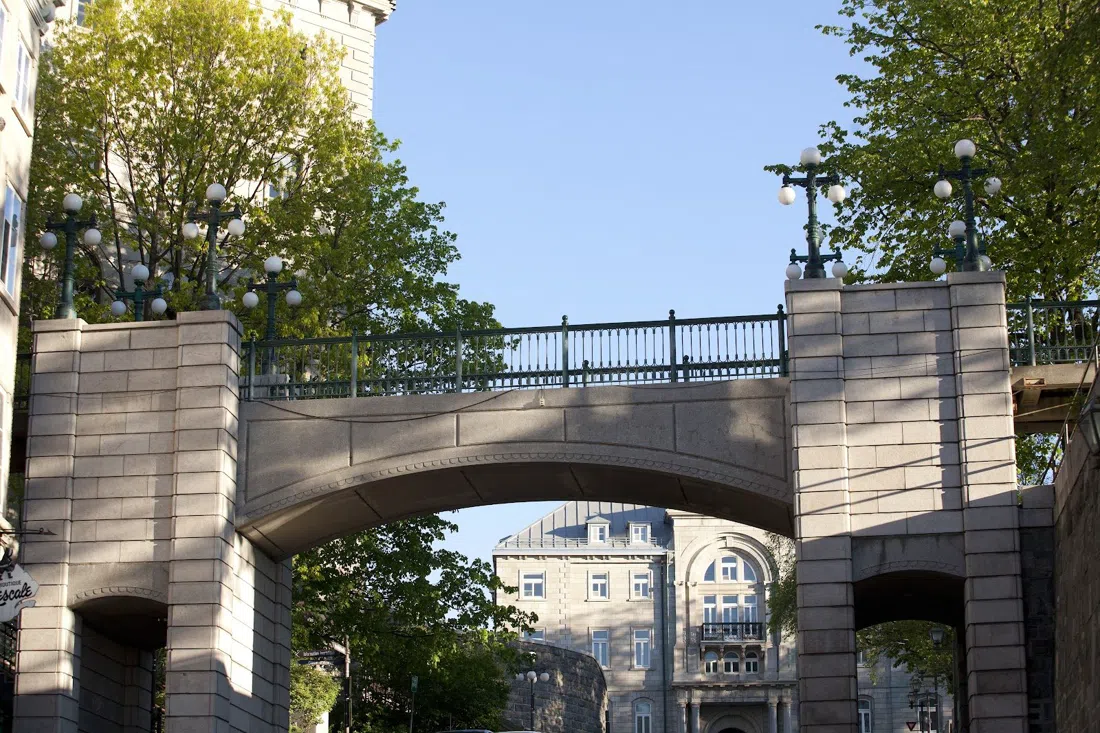
Porte Prescott (the stepped passage linking Terrasse Dufferin down to rue Sault-au-Matelot in Lower Town) is worth pausing at longer than the other three. It's a 1983 reconstruction on the site of the 1797 original, itself torn down in 1871 — walk through it and you're standing in the gap between an 18th-century fortification and a late-20th-century decision to rebuild what a 19th-century city had thrown away.
Outside the Wall, Along It and Above It
For the closest possible look at the wall's exterior face, walk the Promenade des Gouverneurs (the boardwalk climbing the cliff from Terrasse Dufferin up toward the Citadelle). It's free and open year-round, though there's no snow removal in winter, so April through November is the realistic window. It narrows to single file in places, which matters if you're in a group — spread out rather than bunching, both for your own footing and for walkers coming the other way.
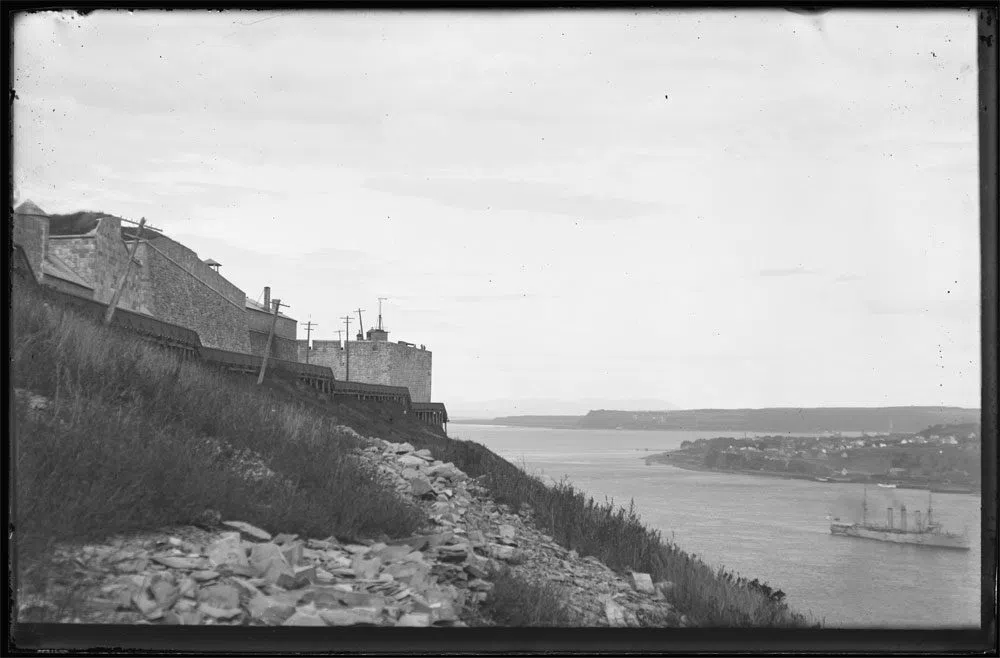
Further out, Martello Towers and National Battlefields Park (the Plains of Abraham, west of the Citadelle) covers the outer ring of the defence system — squat, thick-walled 1808–1812 towers built to cover the landward approach the walls themselves couldn't. The park is Canada's first national historic park and free to walk; Towers 1 and 2 host live interpretation programming through the National Battlefields Commission, and group interpretive programming can be arranged separately if you're travelling with a tour party rather than walking through on your own.
Seeing the Whole Circuit
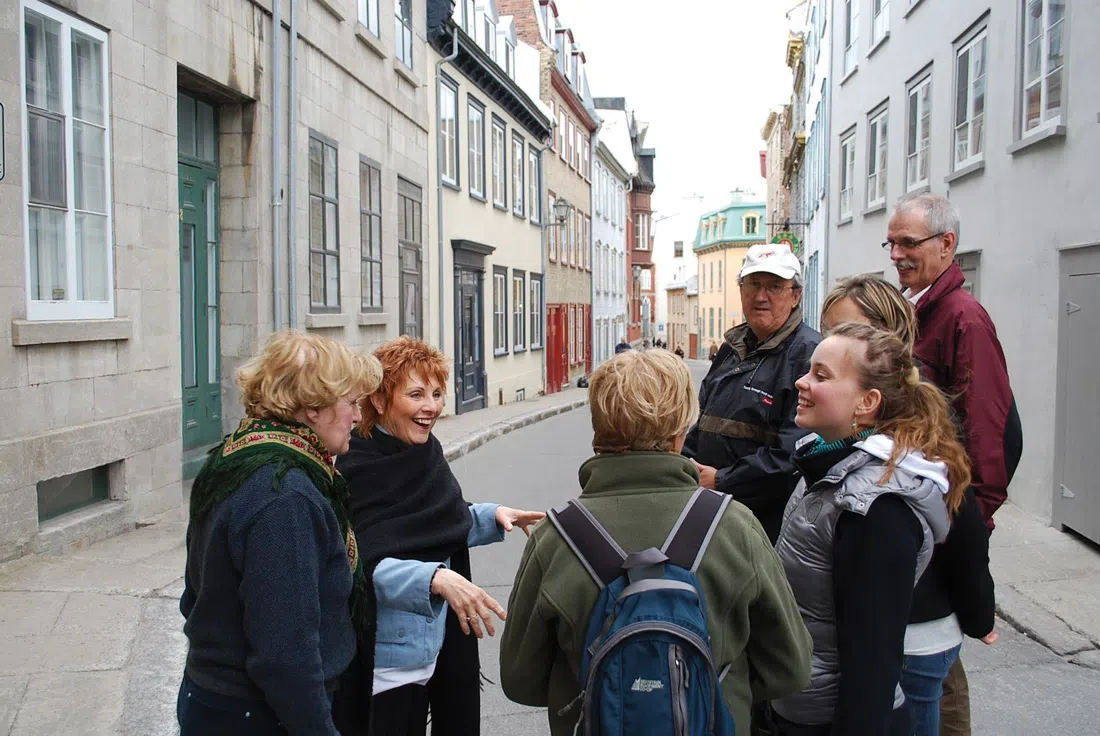
Walking the full 4.6km isn't hard, but doing it with any context takes either legwork or a guide. Tours Voir Québec (a local operator running out of Old Québec) builds tours specifically around the fortifications and the UNESCO old city, priced around $25–35 CAD per person for a group walking tour, with a self-guided audio option if you'd rather set your own pace. They're built for groups and take private bookings directly.
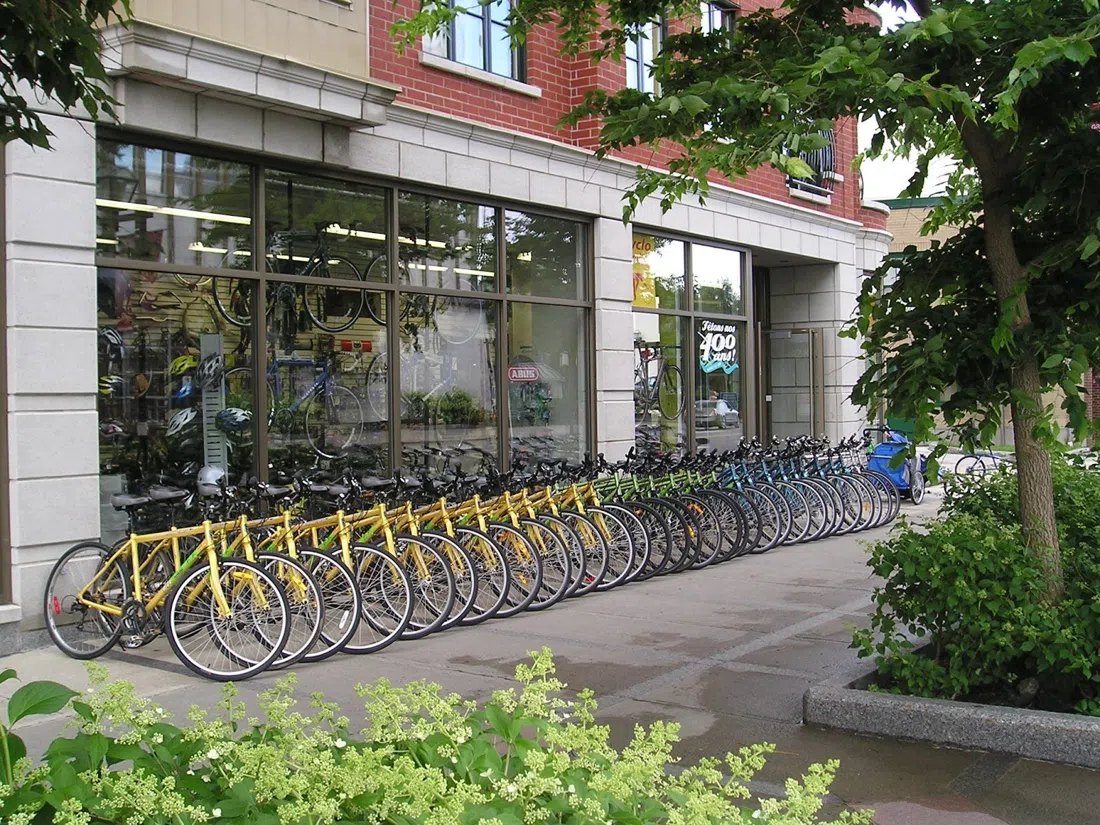
If you want the wider angle in less time, Cyclo Services (operating from the Old Port since 1995) runs guided bike tours around $45–65 CAD per person, with a fleet of over 200 bikes, including e-bikes for the hillier stretches. It's seasonal, May 1 to October 31, 2026, and it's the faster way to actually complete the whole circuit rather than a slice of it — worth knowing if you're only in the city for a day or two.
The View From Outside the Walls
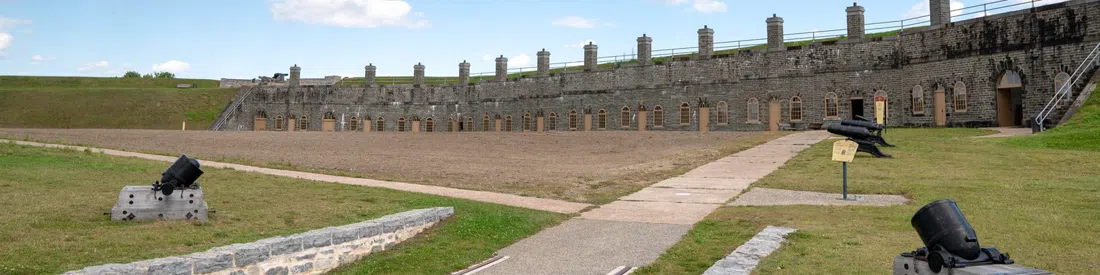
The best-known photograph of Québec City's fortifications is taken from a spot that isn't inside them at all. Fort No.1 – Lévis Forts National Historic Site (across the St. Lawrence in Lévis) was built in the 1860s to complete the city's defences after fears of invasion following the American Civil War, and its ramparts give the classic long view of the walled city from the water side. The Visitor Reception Centre handles groups Wednesday to Sunday in peak season, for a modest Parks Canada admission fee. At research time only the 2025 schedule (June 24–October 13) was confirmed — check the exact 2026 dates before you build a trip around it, since Parks Canada resets seasonal openings site by site.
Getting There, Costs and Timing
Old Québec's walls sit entirely within walking distance once you're inside the old city — you don't need transport between any of the sites above, though the funicular between Upper and Lower Town saves the legs if you're doing Porte Prescott and Terrasse Dufferin in the same afternoon. Fort No.1 in Lévis is the exception: get there by the Québec–Lévis ferry, a short crossing worth doing for the view of the wall from the water even if you skip the fort itself.
Cash isn't necessary — cards are accepted everywhere from Parks Canada ticket booths to the tour operators — but small bills are handy for anything unattended, like the occasional honesty-box stall near Terrasse Dufferin in summer. Prices throughout this guide are in Canadian dollars (CAD); as a rough sense, $20 CAD sits somewhere around $14–15 USD or €13–14, though check the day's rate before you budget a trip.
June through September is when everything on this list is actually open — several of the ticketed sites, including the Ramparts Walking Tour, Parc-de-l'Artillerie and the Saint-Louis Forts, run on a fixed summer season and are closed the rest of the year. If you're visiting outside that window, you'll still get the full free circuit — the gates, Terrasse Dufferin, the Promenade des Gouverneurs and the Plains of Abraham — just not the guided interiors. Budget half a day for the free wall circuit alone, a full day if you're adding the Citadelle and one Parks Canada site, and two days if you want Lévis in the mix as well. For where to stay while you do it, start with Quebec hotel search, and for the rest of the city beyond the walls, see the Quebec guide.