
Somewhere in the Loto-Québec Zone, opposite the National Assembly, a crew is stacking two-thousand-odd blocks of ice into a building with turrets, a throne room, and a life expectancy of about six weeks. Nobody pretends otherwise. The palace goes up in late January, holds court through the Carnaval, and by April it's a puddle on Place de l'Assemblée-Nationale that nobody bothers to mourn, because everyone already knew the deal. That's the thing worth understanding before you plan a trip around it: this isn't a landmark you visit once and check off. It's a structure with a lifespan, and the most honest way to see Québec City in winter is to watch it move through that lifespan — building, ritual, and eventual surrender to the river it came from.
Bonhomme's Ice Palace: a building that knows its own end date
Bonhomme's Ice Palace (Palais de Glace), Place de l'Assemblée-Nationale, has been part of the Carnaval since 1894, when the first one went up nearly 40 metres tall and drew crowds who'd never seen a building made entirely of frozen river. It's rebuilt from scratch every year in the same spot in the Loto-Québec Zone, a short walk from Old Québec's gates, and in 2026 it runs the length of the Carnaval, February 6 to 15. The current version is smaller than that 1894 original but more elaborate inside: multiple themed rooms, several based on Québec folk legends, one of them designed this year with students from Rochebelle high school. Bonhomme, the Carnaval's snowman figure, technically lives here for the duration — it's his official residence, which is the kind of civic fiction Québec commits to fully.
Getting in costs nothing beyond the Carnival Effigy pass, C$29 if you buy before January 11 and C$39 after, which also covers the toboggan runs, the snow sculpture site, and most of the other ticketed activity around the Carnaval. The courtyard is wide and handles coach groups and school trips without a bottleneck, particularly before early evening, when a DJ set turns the space into something closer to an outdoor club and the crowd thickens fast. If you're bringing a group, go before 6pm. If you want the atmosphere at its most theatrical, go after dark, when the ice catches the coloured lighting and the whole structure looks less like architecture and more like a stage set that happens to be load-bearing.
The palace is the reason this piece exists, and it's worth sitting with what it actually is: not a monument in the usual sense, made to outlast its builders, but the opposite — a building whose entire point is that it won't. Every carved wall is a bet against the calendar. By the time the last visitor walks through in mid-February, the melt has already started; it just isn't visible yet.
Twenty minutes north: the ice hotel and the snow sculptors
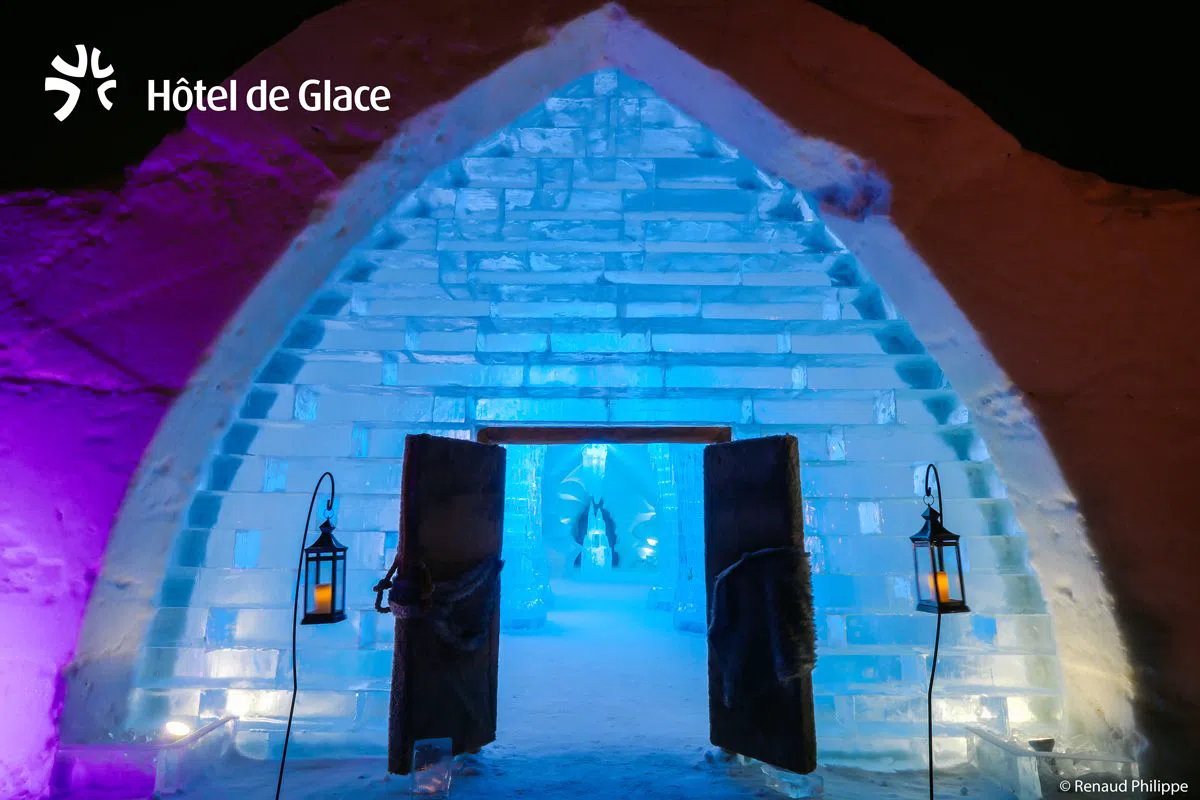
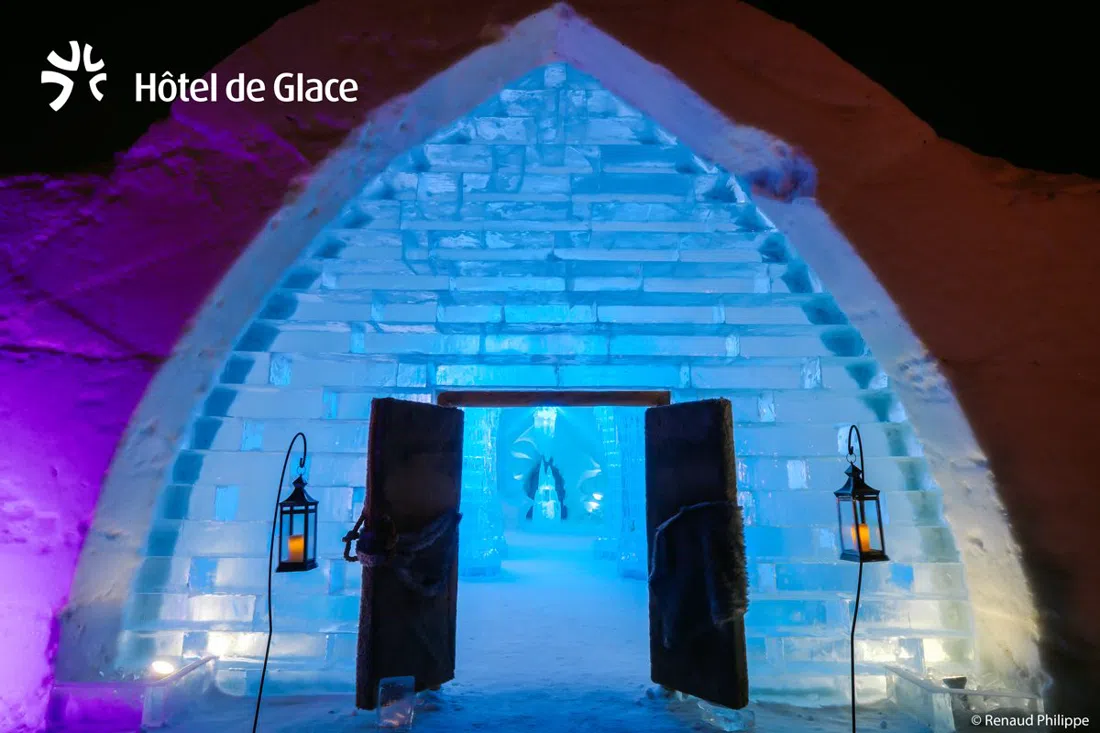
The palace has a much larger cousin twenty minutes outside the city, and it runs the same seasonal arc on a bigger canvas. Hôtel de Glace, at Village Vacances Valcartier in Saint-Gabriel-de-Valcartier, is North America's only ice hotel, rebuilt annually from December through late March depending on how the weather holds. It opens for day visits in late December and for overnight stays in early January once conditions allow. A day tour, walking the ice bar, the chapel, and the themed suites, runs roughly C$22–30 and suits coach groups and drop-in visitors easily — there's no booking friction for a daytime look around. Sleeping there is a different proposition: overnight suites start around C$300 and up, and it's built for couples or small groups rather than large parties, since the rooms are genuinely made of ice and snow and the whole appeal is the novelty of a single night in sub-zero comfort gear. If the palace is the city's civic ice monument, the Hôtel de Glace is its private, indulgent equivalent — same annual build, same inevitable melt, considerably higher thread count on the way there.
Back on the Plains of Abraham, a different kind of temporary monument goes up every year at the International Snow Sculpture Competition, running since 1970 and drawing more than fifty teams from roughly thirty countries, split into Québec, Canada, and international categories. Sculptors work compressed snow blocks into pieces four to six metres tall over several days, and the finished works — animals, castles, riffs on famous sculptures — stand on an open public site free to view with the Effigy pass, easy to wander at your own pace with a group of any size. Snow sculpture melts faster and less gracefully than the palace's engineered ice blocks; a mild week can soften a nose or an ear well before the Carnaval ends. Seeing it early in the run, rather than the final weekend, is the safer bet if you want the sculptures at full definition.
Two rituals that orbit the palace
The palace stands still. Everything else at the Carnaval moves around it, and the two clearest examples of that are the parade and the plunge.
Bonhomme's Night Parade runs twice in 2026 — February 7 on 3e Avenue in Limoilou, and February 14 on Grande Allée, ending near the Parliament building not far from the palace itself. Both are free, need no booking, and run along a public street route that absorbs any group size without difficulty; over 300 performers move through eight sequences of music, lights, and circus work. Grande Allée is the more central route if you're staying in or near Old Québec, and it finishes close enough to the palace that pairing the two in one evening is straightforward — parade first, then a walk over to see the ice lit up once the crowds thin.
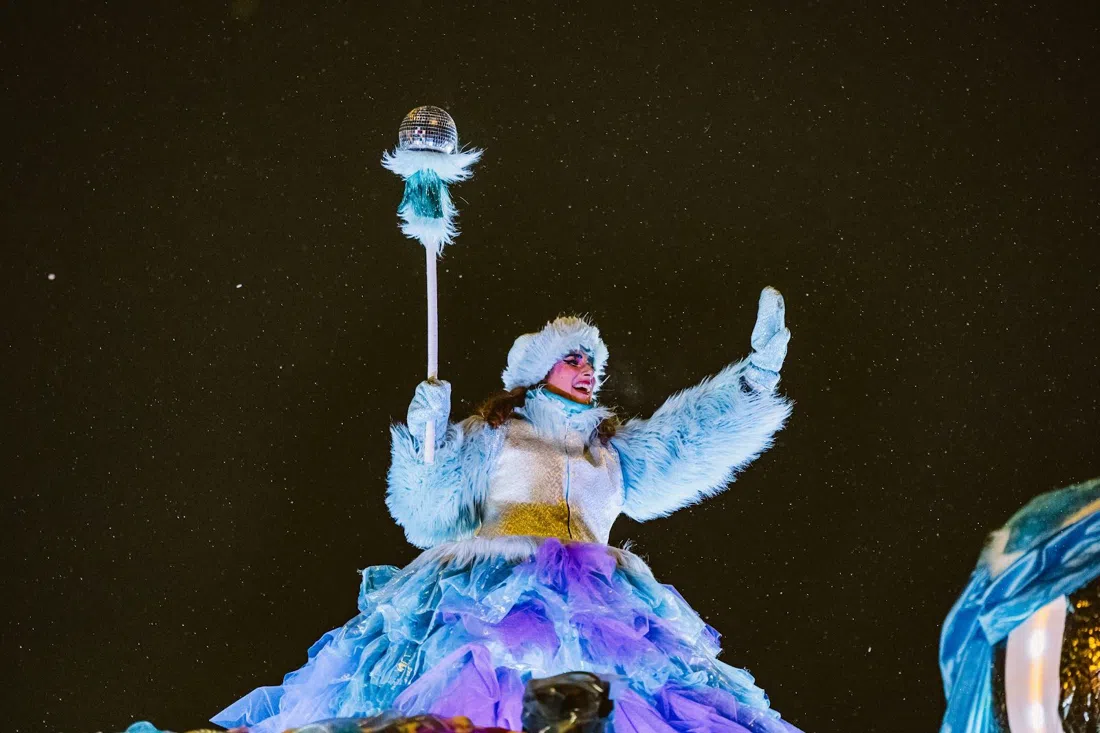
The Bain de Neige (Snow Bath), running since 1983 on the Plains near the Citadel, is the Carnaval's most visceral ritual: participants, generally adults, run into the snow in swimwear while a crowd watches in full winter kit. Watching is free and open to large numbers; taking part yourself requires signing up in advance and is included with the Effigy pass. It's not for everyone, but it's a useful data point for understanding the local relationship with winter here — this is a city that turns the season's worst discomfort into spectacle rather than something to simply endure.
Ice on the river: the canoe race
La Course en Canot à Glace (Ice Canoe Race) started life honestly, as a working crossing rather than a sport. Before steam-hulled ferries could push through the ice, canoeists — mostly out of Lévis — ferried people and goods across the St. Lawrence through the winter months. When that trade died out at the end of the 19th century, the 1894 Carnaval organisers turned it into a race to honour it, and since 1955 it's run as a fixed Carnaval event, on the water between Québec and Lévis. In 2026 it runs February 8, with crews launching from the Old Port and paddling and hauling their canoes across broken river ice in one of the more physically brutal spectacles on this list.
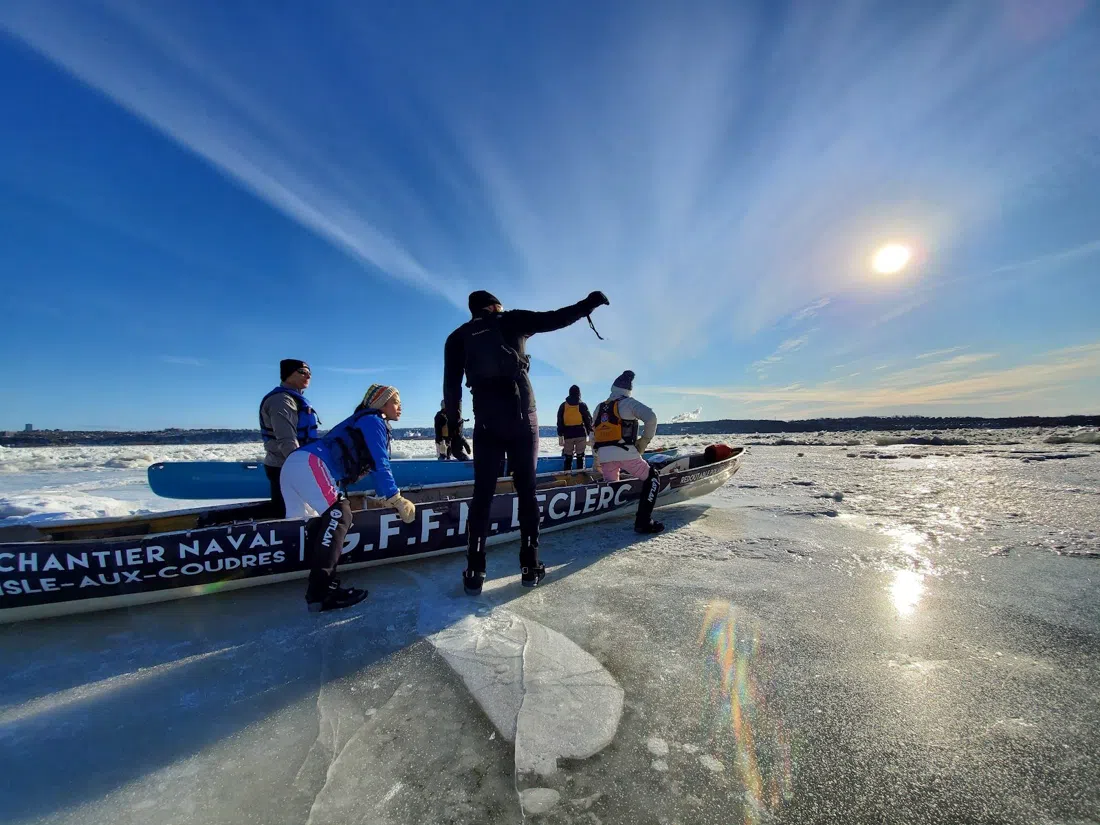
Standing on the port to watch is free and works for any group size. A VIP option puts you aboard the Québec–Lévis ferry itself, docked and open across all three decks with a heated indoor area, DJ, and bar service, though the ferry crossing itself isn't included in that ticket and needs booking separately through the official Carnaval vendor. Like the palace, the race only exists because the river freezes; a genuinely warm winter would end both traditions on the same afternoon, which is part of why locals treat a hard freeze as good news rather than an inconvenience.
The ice that isn't going anywhere yet
Not everything on this list vanishes by spring — some of it simply closes for the season and comes back next December, which is its own kind of temporary monument, just on a longer clock.
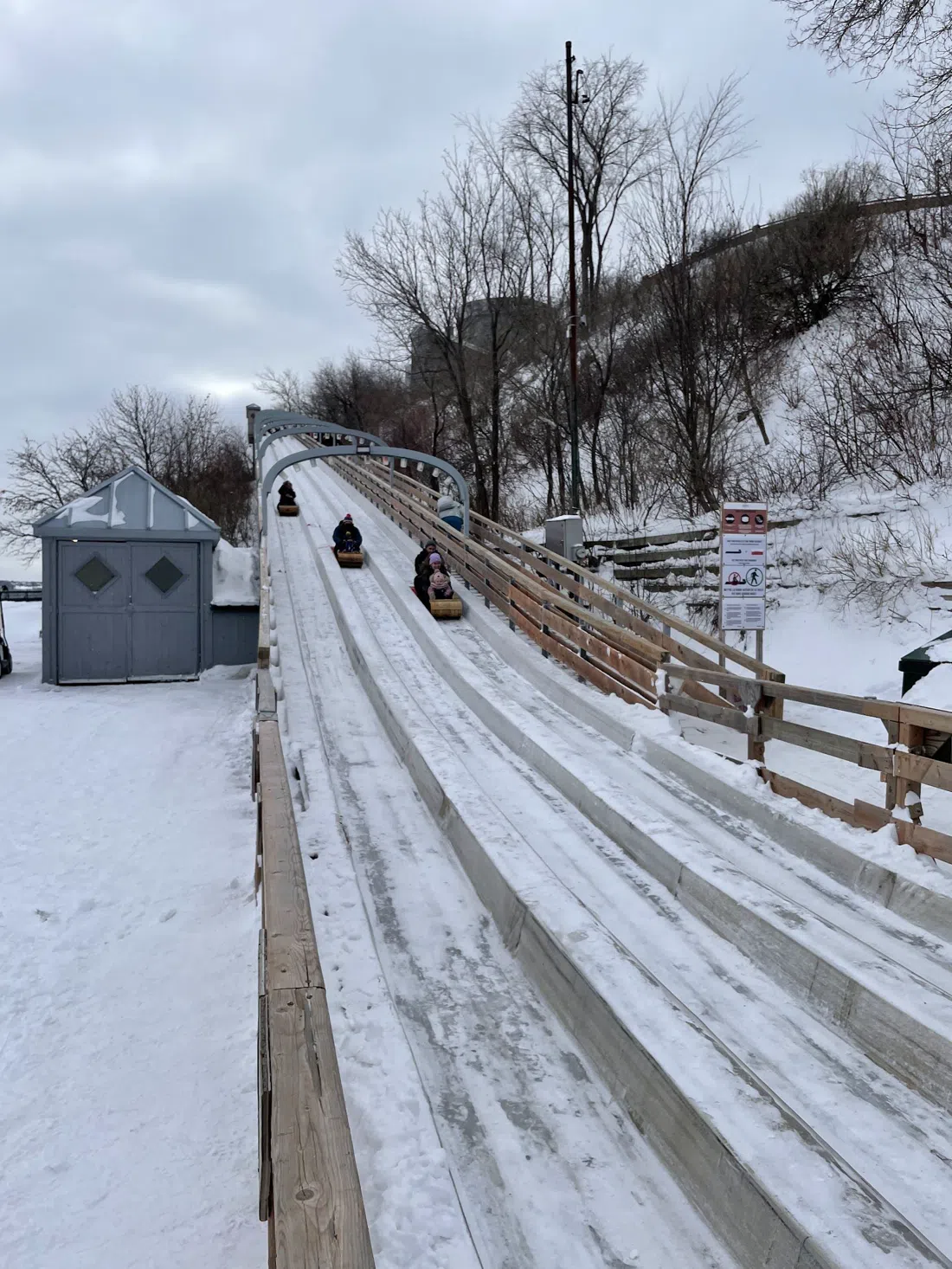
Glissades Au 1884 (Dufferin Terrace Toboggan Slide), right beside the Château Frontenac, has been running wooden toboggan lanes on this terrace since 1884 — nine years before the hotel itself opened — with a gap between 1981 and 1992 before it reopened and has run every winter since. Three lanes, up to four riders per toboggan, speeds that reportedly hit 70 km/h on the way down, and a per-ride price around C$4. It handles groups and queues comfortably outside peak weekend afternoons; go on a weekday morning if you're bringing more than a couple of people and don't want to stand in line between runs. Against the palace's one-season lifespan, this is the useful counterpoint — proof that not every piece of Québec's winter culture is built to disappear.
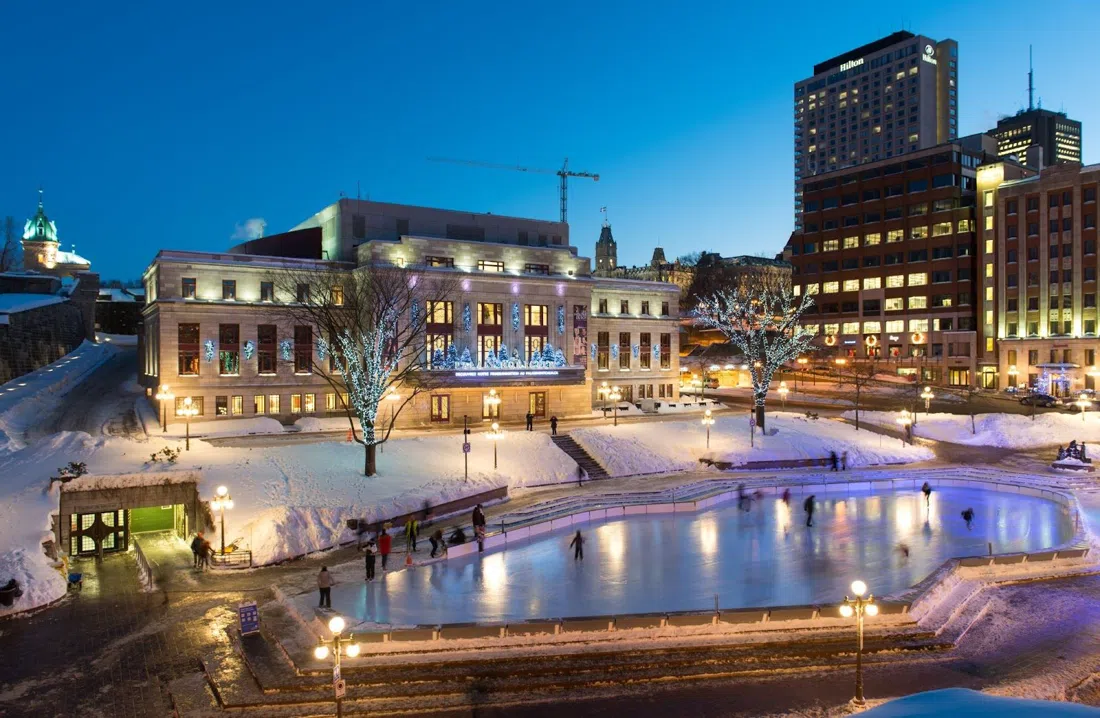
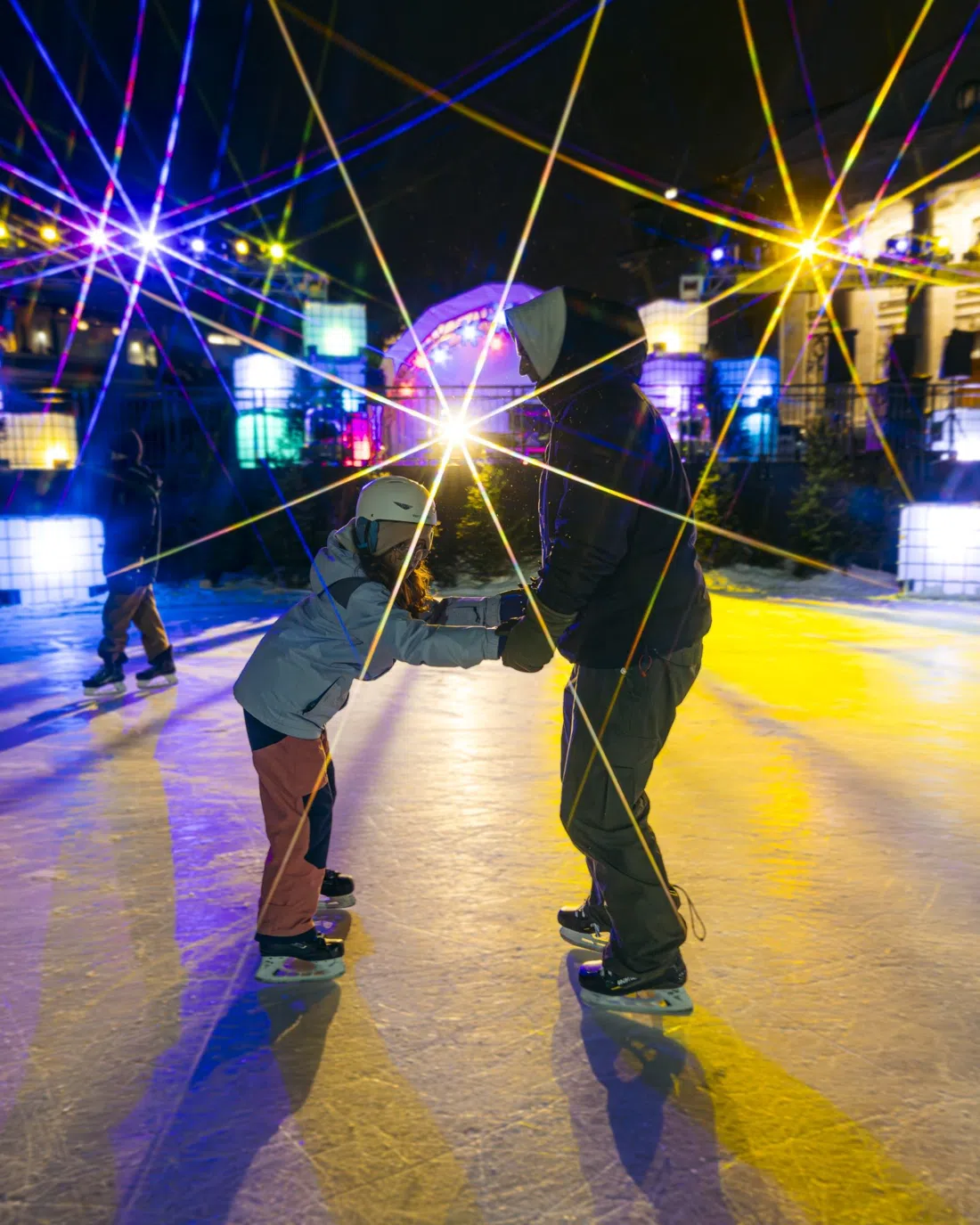
Down at the port, Discoglace du Port de Québec, North America's first ice disco, runs free seven days a week from mid-December through early March, with live singer-songwriters on Fridays and a DJ set Saturdays 5–10pm. No booking, no entry fee beyond skate rental if you need it, and enough space to absorb groups of any size — it's a useful late-afternoon stop if you're already down at the Old Port for the canoe race or Village Nordik. A short walk from Old Québec's gates, Patinoire de la Place D'Youville is a free public outdoor rink open until 10pm most nights, skate rental around C$8, and it sits close enough to the palace site itself that pairing the two into one walkable evening — palace, then a skate at D'Youville — makes sense for anyone based in the old town.
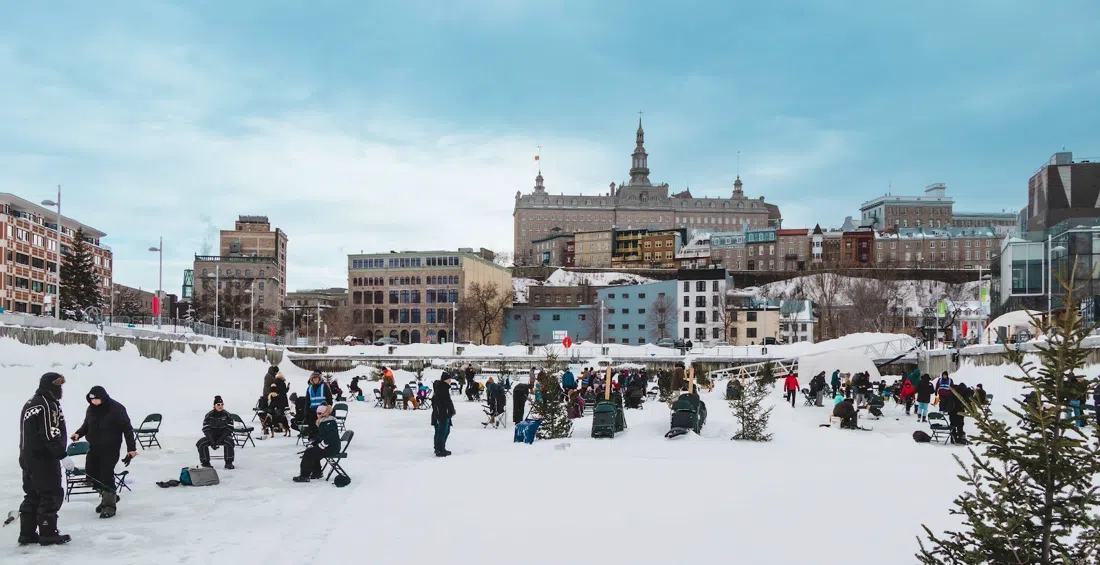
Also down at the port, on the frozen Louise Basin, Village Nordik du Port de Québec runs its tenth edition January 30 to March 8, 2026: an ice-fishing village with inflatable igloos, weekend tournaments, canoe-race introductions, and a Polar Bear Challenge, well suited to organised group programming. Activities run roughly C$15–30 with some zones free to enter. It's the least photographed of the ice structures on this list but arguably the most literal illustration of the theme — the igloos here are built for one season and struck down at the end of it, the same as the palace three kilometres up the hill.
The ice the city didn't build
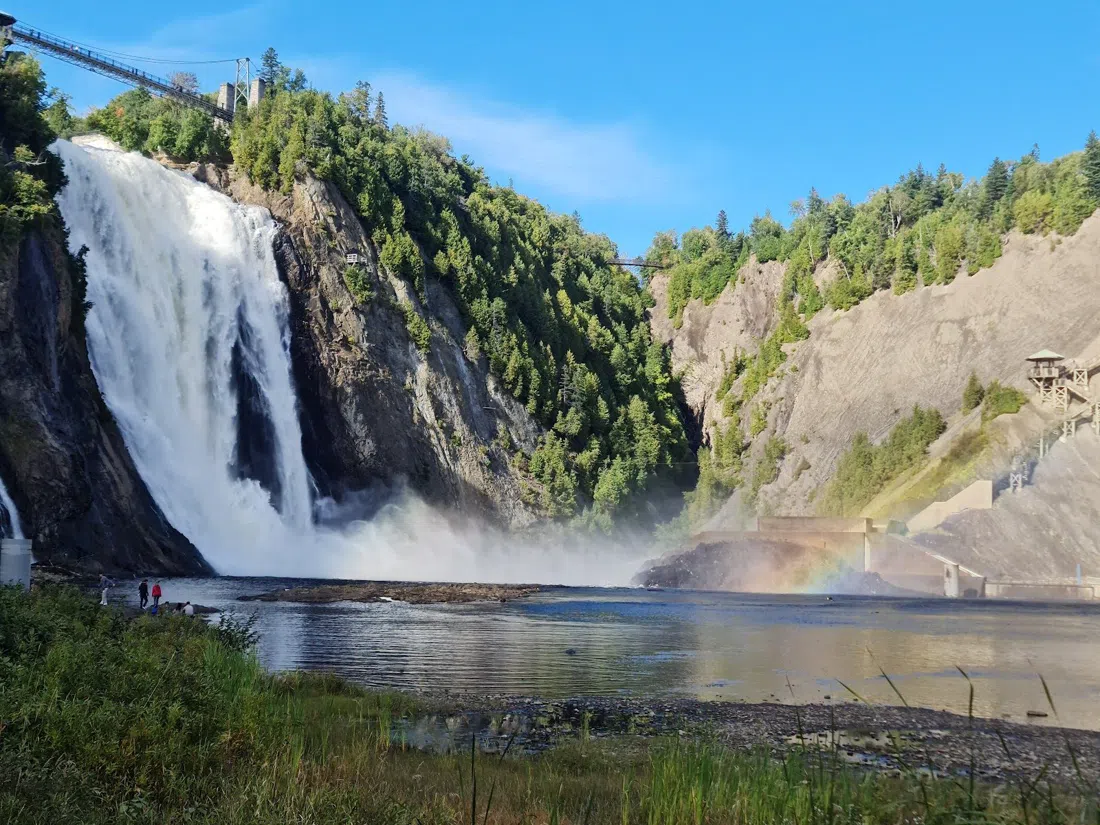
Everything above is engineered — cut, stacked, carved, or inflated. Montmorency Falls Ice Climbing, with Aventurex at Parc de la Chute-Montmorency, is the opposite: a waterfall taller than Niagara that freezes along its western wall each winter into a climbable ice face, entirely without human input. Guided half-day sessions run most weekends from early January into mid-March, roughly C$150–200 including gear, no prior climbing experience required, and groups are welcome with advance booking. It sharpens the question the whole piece is circling — why a city goes to the trouble of building an ice palace it knows will melt, when nature is doing the same thing a few kilometres away for free. The honest answer is that the falls freeze regardless of whether anyone shows up. The palace exists because someone decided winter should be something the city performs, not just survives.
Planning it: transport, cash, timing, budget
Getting around: Old Québec, the palace site, Place D'Youville, and Dufferin Terrace are all within a twenty-minute walk of each other — you don't need a car for the core Carnaval sites. The Old Port (Discoglace, Village Nordik, the canoe race) is a further ten-to-fifteen-minute walk or a short bus ride down the hill. Hôtel de Glace and Montmorency Falls both sit outside the city — budget for a taxi, a rental car, or one of the shuttle/tour options that run during the Carnaval, since transit out to Valcartier is limited.
Cash and cards: Most Carnaval vendors, food trucks, and ticket booths take cards, but a mix of small cash for skate rentals, toboggan rides, and food stalls saves time in queues. Prices throughout are in Canadian dollars.
Timing: The 2026 Carnaval runs February 6–15. Buy the Effigy pass before January 11 (C$29 vs C$39 after) if you know your dates. Weekday evenings before 6pm are the calmest window for the palace and toboggan slide; weekend afternoons draw the heaviest crowds, particularly around the two night parade dates, February 7 and 14. If you want the snow sculptures at their sharpest, go in the first week rather than the last.
Budget: A full day covering the palace, snow sculpture site, and Bain de Neige viewing costs nothing beyond the Effigy pass. Add the toboggan slide (~C$4/ride), a Hôtel de Glace day visit (~C$22–30), and skate rental (~C$8) for a fuller itinerary still comfortably under C$100 a person. An overnight at the ice hotel or a Montmorency ice-climbing session are the two genuine splurges on this list, each running into the low hundreds. Book Quebec hotel search well ahead of Carnaval dates — the city's rooms fill fast in February — and see the full Quebec guide for the rest of the city beyond the ice.