
Walk east out of the old lower town and the streets stop performing. Cobbles give way to a concrete deck wide enough to turn a coach on, a cruise ship sits broadside where the river narrows, and the air smells of diesel and cold water rather than maple. This is the Port of Québec, and standing in the middle of it costs nothing.
What you are actually looking at
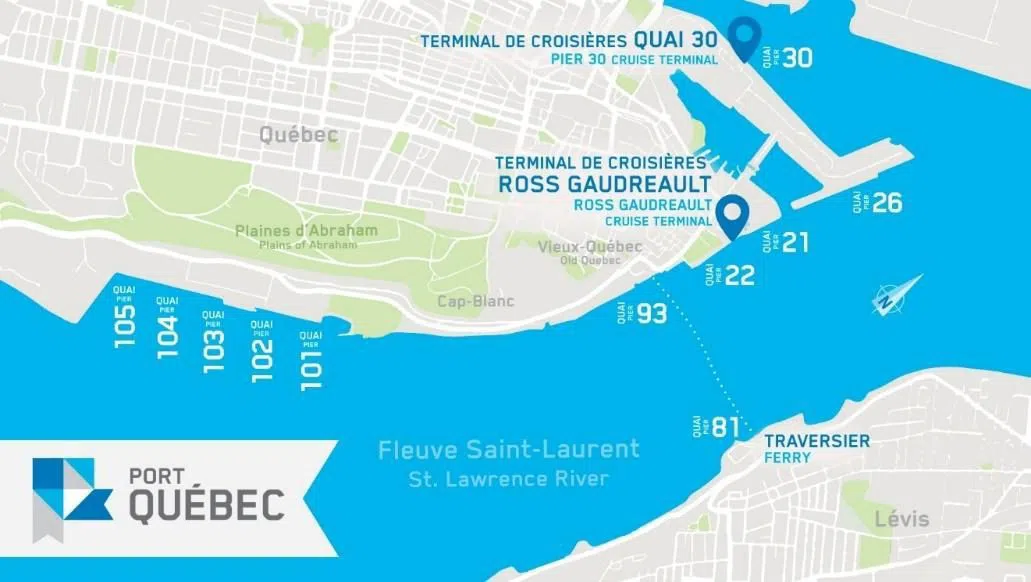
The port's public face is Pointe-à-Carcy and the Port of Québec Cruise Terminal (Vieux-Port), the blunt headland where the river, the old city and more than sixty cruise calls a year meet. The terminal building carries the name Terminal Ross-Gaudreault; the deck around it is a promenade with a cycle path running through it, and the forecourt is open to anyone, ticket or no ticket. What is closed to you is narrow and obvious: the ship's gangway, the industrial ground at wharf 30, and the Estuary wharf at 300 rue de l'Estuaire, which is reachable only by shuttle. The working waterfront, which most visitors assume is off-limits, is the part you can walk. The hull and the gangway, which they picture walking, are the part you cannot.
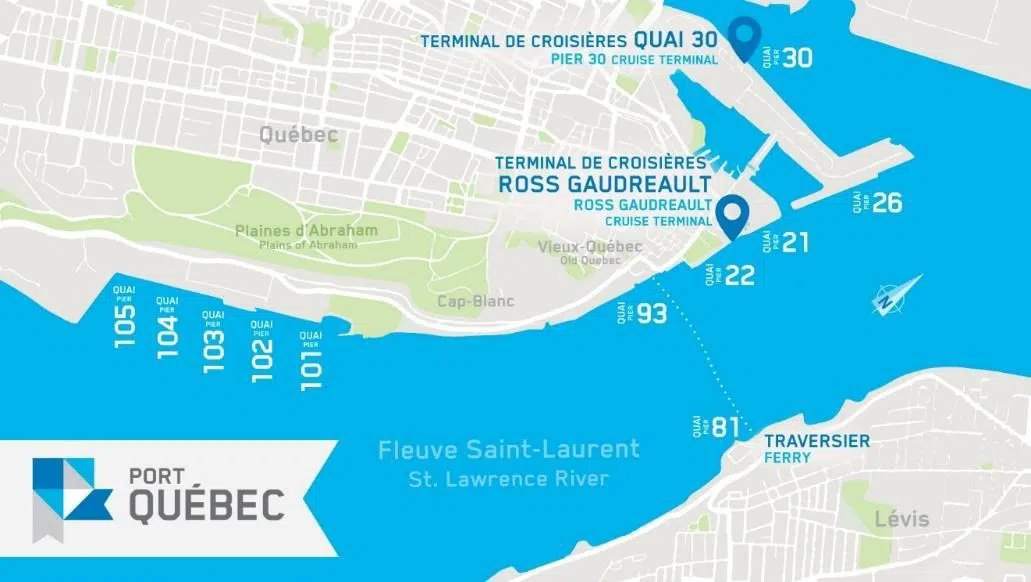
Read the harbour instead. Give it ten unhurried minutes and the mechanics come clear: the tide shoving hard through the narrows, pilots coming alongside, the ship's mooring lines creaking as the water drops, coach and walking groups forming up on the forecourt in cruise season while terminal staff count heads. This is not a monument. It is the reason the city exists at this precise bend in the river, which is a different and better kind of sightseeing. Bring something warm, because the deck is exposed on every side and the wind off the water runs a good few degrees colder than the streets behind you.
Where to stand for the view
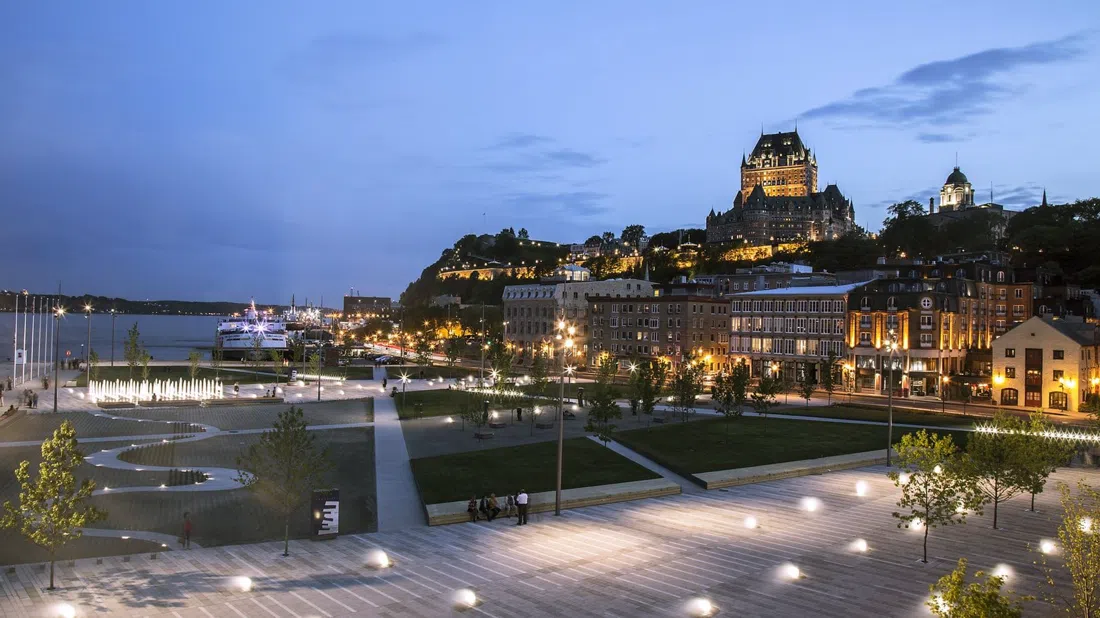
Five minutes west, Place des Canotiers (Vieux-Port, between the terminal and the old lower-town square) is where you take the picture. A broad staircase climbs to a cantilevered platform that puts ship, river and the old roofs in a single frame, and there is no ticket, no gate and no closing time. It is also the standard assembly point for guided walks leaving the Old Port, so if you see thirty people in a semicircle around someone holding a paddle or a flag, that is the system working as designed. The square is big enough to absorb them; wait four minutes and you will have the rail to yourself.
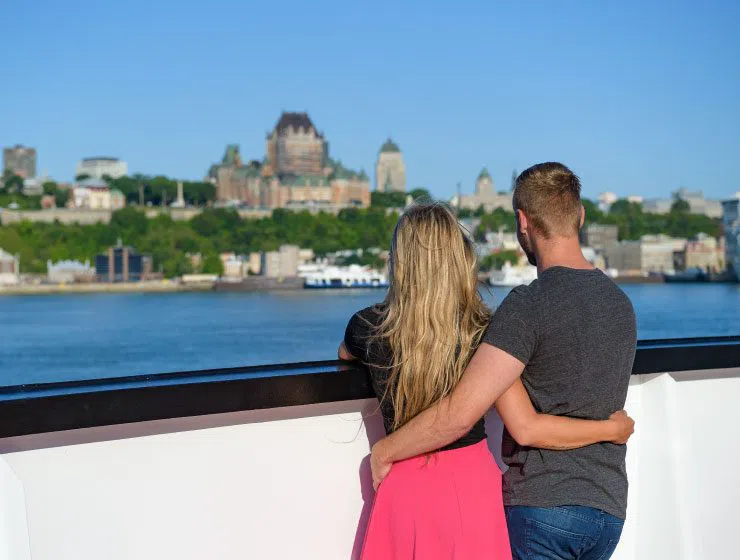
If you want the port from the other side, take the Québec City–Lévis Ferry (terminal at the foot of the Old Port). It is a public service, not an excursion: walk on, pay at the gate, no booking. A foot passenger pays C$4.25, C$3.60 over 65, C$2.95 for ages 6 to 15, and under-6s travel free. Fares went up 2.05% on 1 April 2026. The crossing takes twelve minutes, boats run every twenty to thirty minutes, and it operates year-round; the timetable was simplified to the winter pattern across the whole year after the Paquet wharf on the far bank stopped taking ships. Stay on the open deck, look back, and you get the cliff, the port and the cruise berth in one line for the price of a coffee. A coach party should split across two sailings at rush hour rather than trying to board as one block.
Getting out onto the working water
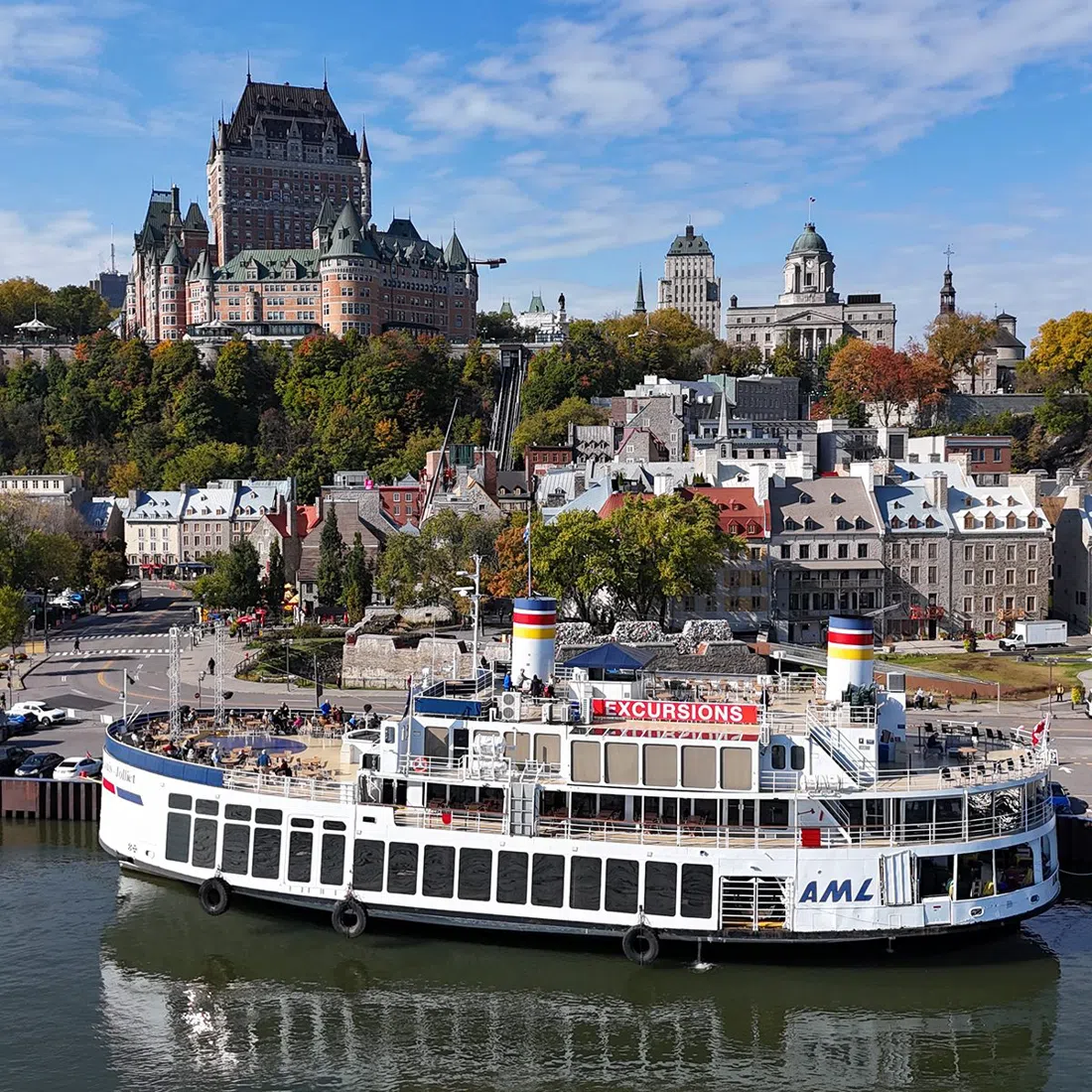
The ferry shows you the port from outside. Croisières AML (Quai Chouinard, Vieux-Port) takes you into it. The sightseeing run is an hour and a half and starts around C$50 for an adult, with an audioguide in eight languages; dinner sailings cost considerably more. In 2026 the season runs 6 May to 1 November with departures at 11:30, 14:00 and 16:00, and the operation is built for volume: group rates, school parties, corporate bookings and full private charters. Pick the 16:00 if you want the light on the cliff face, the 11:30 if you are sailing with children who fade in the afternoon.
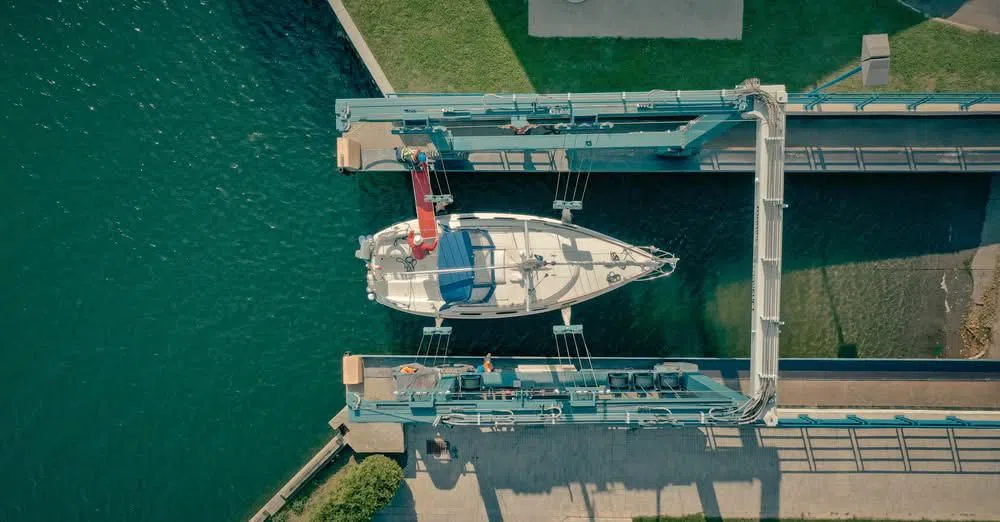
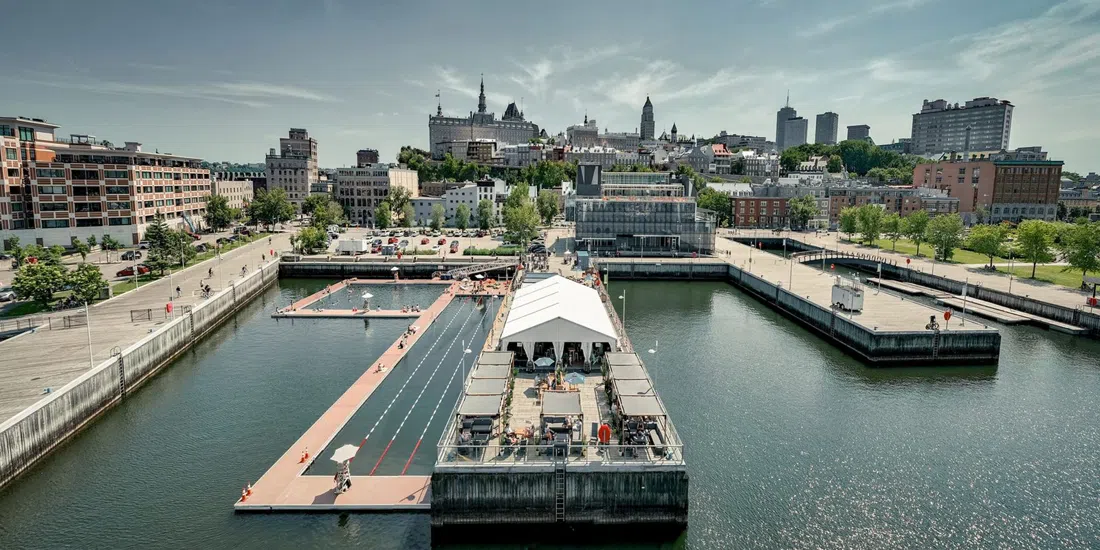
Two stretches of the harbour only make sense in summer. L'Oasis du Port de Québec (Vieux-Port basin) is supervised open-water swimming inside a working harbour, free to use, roughly 19 June to 30 August, subject to weather and water quality. Swim courses, club sessions and water-polo tournaments run through the season, and the terrace with La Folle Tablée food service can handle a group. Along the same water, Marina du Port de Québec (Vieux-Port) is the pleasure-craft half of the harbour: the basin edge feels like a public walk and is free, but the pontoon gates need a magnetic card, so on foot you stay shoreside. There are 100 visitor berths at C$2.55 per foot if you are arriving by boat. It is open and staffed from early May to the end of October, reception 07:30 to 20:30.
Come in deep winter instead and the ice does the programming. Village Nordik du Port de Québec (Vieux-Port) sets up on the ice from 30 January to 8 March 2026, daily through Carnaval and the March school break. The site is free to wander; guided ice-fishing sessions are paid, booked online, and come with all the tackle, which matters because turning up without a reservation on a Saturday in February is how you end up watching other people fish. Families and groups are the core market here, tournaments included.

The climb, the queue and the lane above
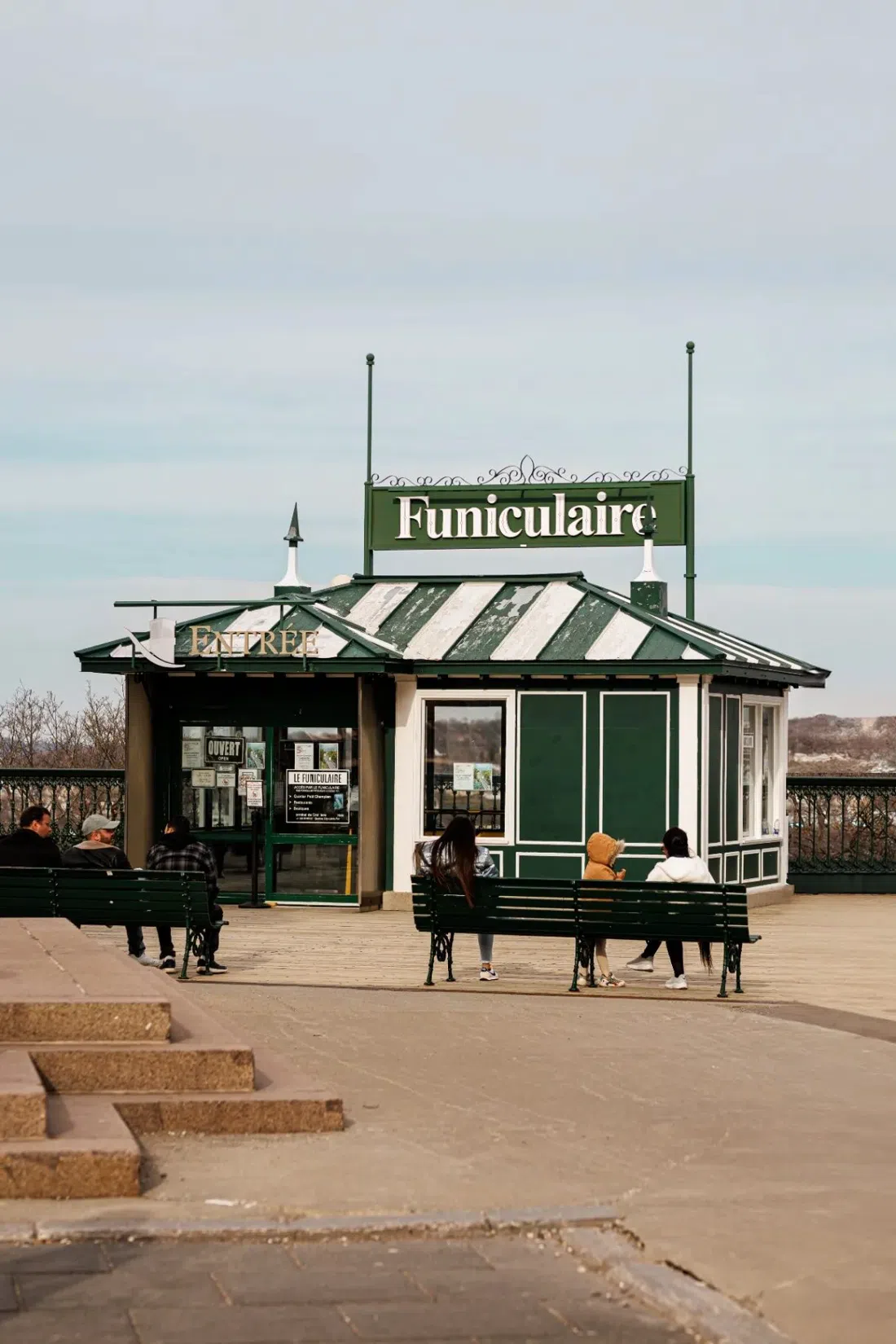
The port sits at the bottom of a cliff, and sooner or later you go up it. Funiculaire du Vieux-Québec (Petit Champlain to the Upper Town) is the honest shortcut: C$7 a ride, cash only at the door, with machines at both stations. Children under 117 cm and wheelchair users ride free. It runs year-round from 09:00 to 21:00, and to 22:00 from 24 June to Labour Day. There is no booking and the cabins are small, so the queue moves in waves. The pinch points are mid-morning and the hour after a cruise ship docks. If the line is down the street, walk the stairs alongside; it is shorter than it looks from the bottom.
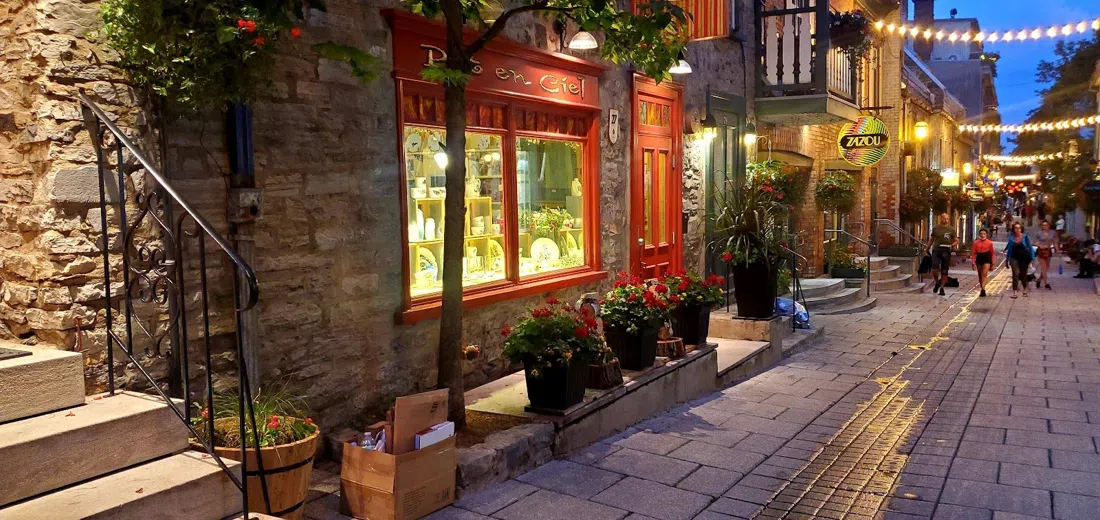
The funicular's lower station opens into Quartier Petit Champlain (Basse-Ville), two minutes uphill from the cruise berth and the obvious pairing with the port itself. It is a 45-merchant co-operative spread across 29 buildings on what is described as North America's oldest commercial street, and that age shows in the width: the lane is genuinely narrow. Couples do well here at any hour. A group of twenty should walk it in single file and early or late, not at 14:00 on a day with a ship in.
Indoor hours when the weather turns
The port has no shelter, so have one site in reserve. Musée de la civilisation (Vieux-Port, two minutes from the cruise berth) is the obvious anchor: C$27 for adults aged 35 to 64, C$22 for 18 to 34, C$10 for teenagers, free under 6, C$58 for a family. It takes school and tour groups year-round through a dedicated group entrance with advance booking, so large parties are routine rather than a problem. The trap is the calendar. It closes on Mondays, which catches visitors who assume the whole quarter runs seven days.
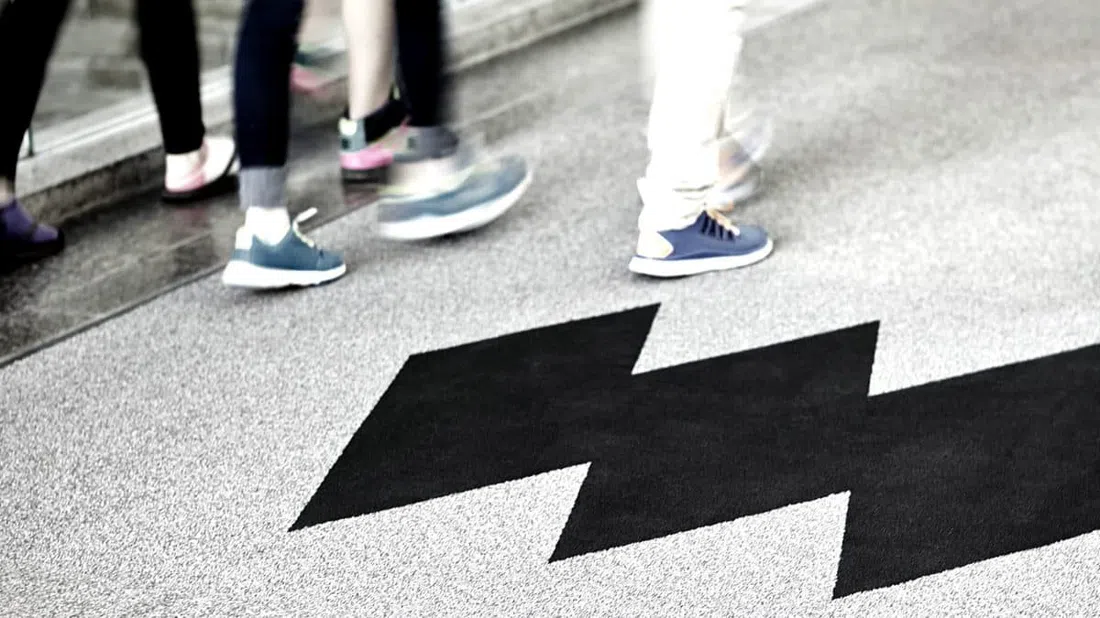
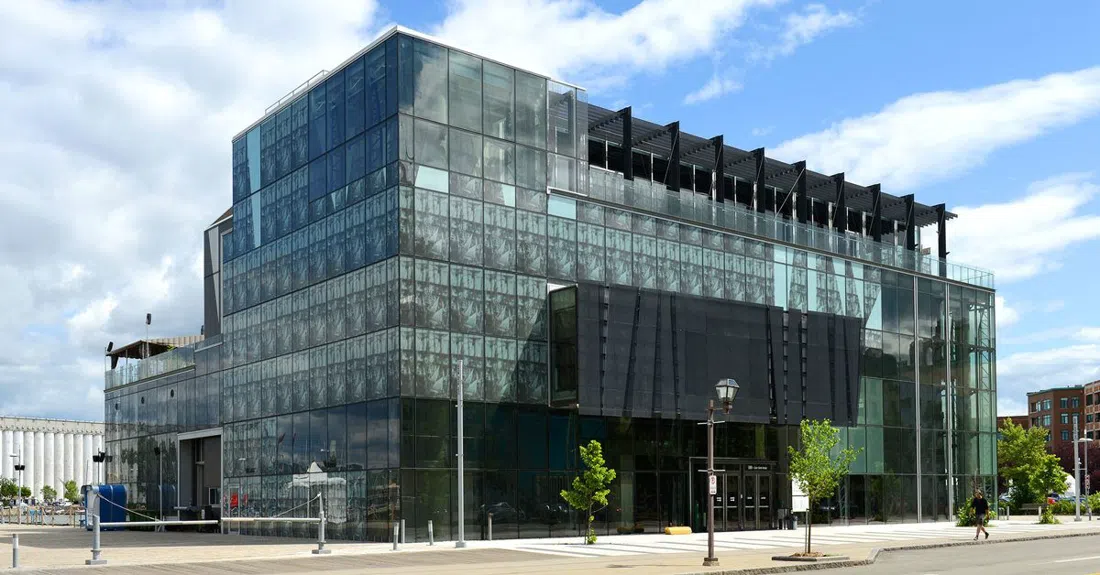
On the headland itself, Espace Quatre Cents (Pointe-à-Carcy) is a purpose-built public pavilion with a reception hall, six exhibition rooms, a multimedia room and a café. Use the current name, as the old 'Espace 400e' signage has gone. Much of the programming is free, and in 2026 it hosts the 12th Manif d'art Québec City Biennial under the theme 'Breaking the Ice'. Group visits are normal.
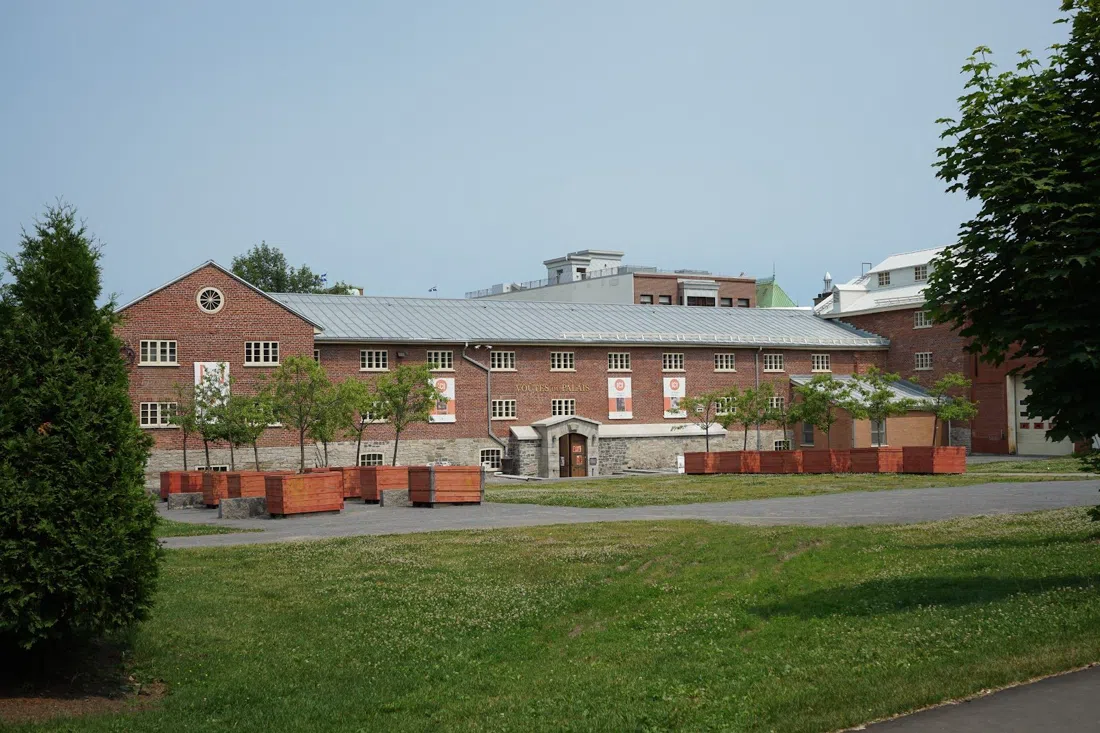
For the quietest real history near the water, L'Îlot des Palais (Vieux-Port, by the rue Saint-Paul end) is a small archaeological site with archaeologist-led guided visits and admission well under museum rates, though check the current price before you go. It opens daily 09:30 to 16:30 from 22 June to 30 September 2026, then Thursday to Sunday off-season, with 'Révélations' and a hundred-years-of-nightlife show running to 31 December 2026. It takes booked groups and school parties, but a full coach should split into two.
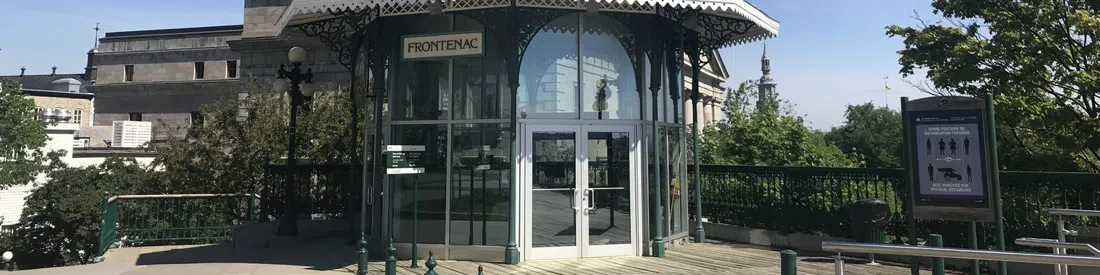
Up top, pair the terrace walk above the port with Saint-Louis Forts and Châteaux National Historic Site (Haute-Ville), a Parks Canada crypt of excavated foundations under the promenade with guided tours and a single-digit adult admission, free or discounted with a Parks Canada pass. It opens daily 09:30 to 17:00 from 16 May to 12 October 2026, then Wednesday to Sunday until 25 October. The underground galleries are narrow, so booked groups move through in batches. The Frontenac staircase nearby closes intermittently for repairs, so have a second route down in mind.
Eating within sight of the ships
Le Café du Monde (Vieux-Port) shares an address with the cruise terminal, which makes it the closest proper sit-down meal to the gangway. It seats around 190 across a terrace, a glazed room and a dining room, so it is one of the few places on this waterfront that can actually take a coach party. Book ahead in cruise season anyway. Reckon on C$50 to C$75 a head. It opens 11:30 to 21:30 on weekdays and from 09:00 at weekends.
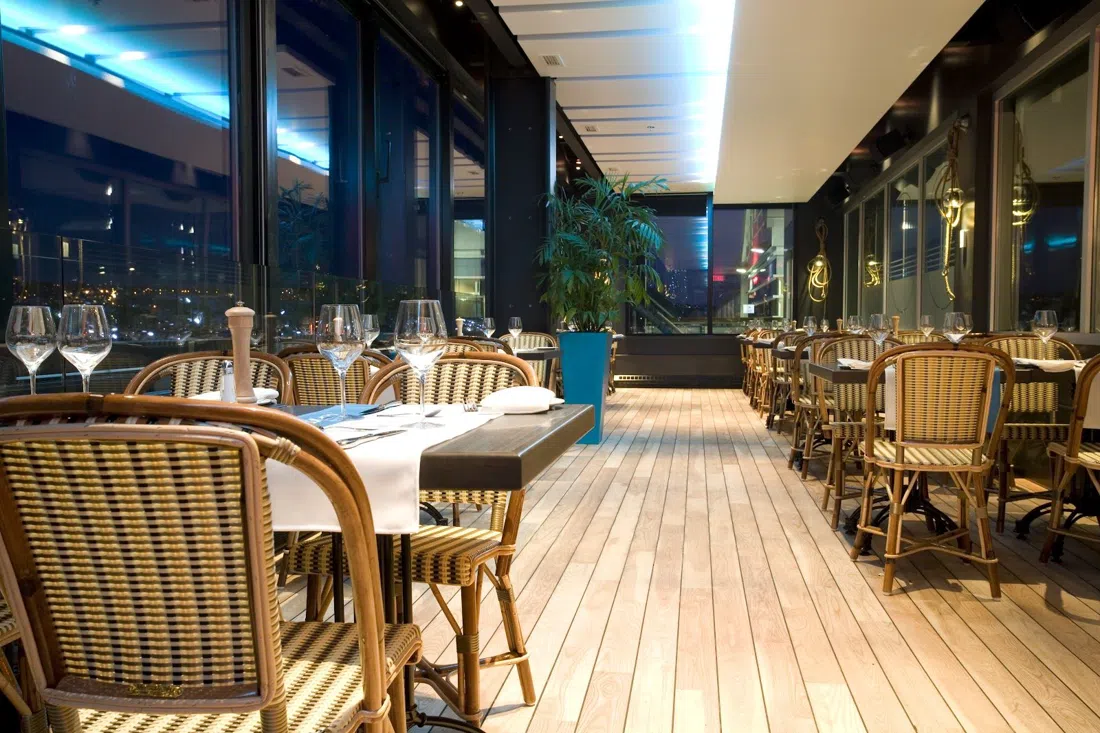
At the other end of the bracket, Le Buffet de l'Antiquaire (rue Saint-Paul) has been serving baked beans and homemade jam from 06:00 daily for more than forty years, at roughly C$15 to C$25 for breakfast. The room is tiny: fine for two or four, poor for a group. Reservations are taken, and from May to October you do not need one. It is also the gateway to the rue Saint-Paul antiques strip, the natural extension of a port walk.

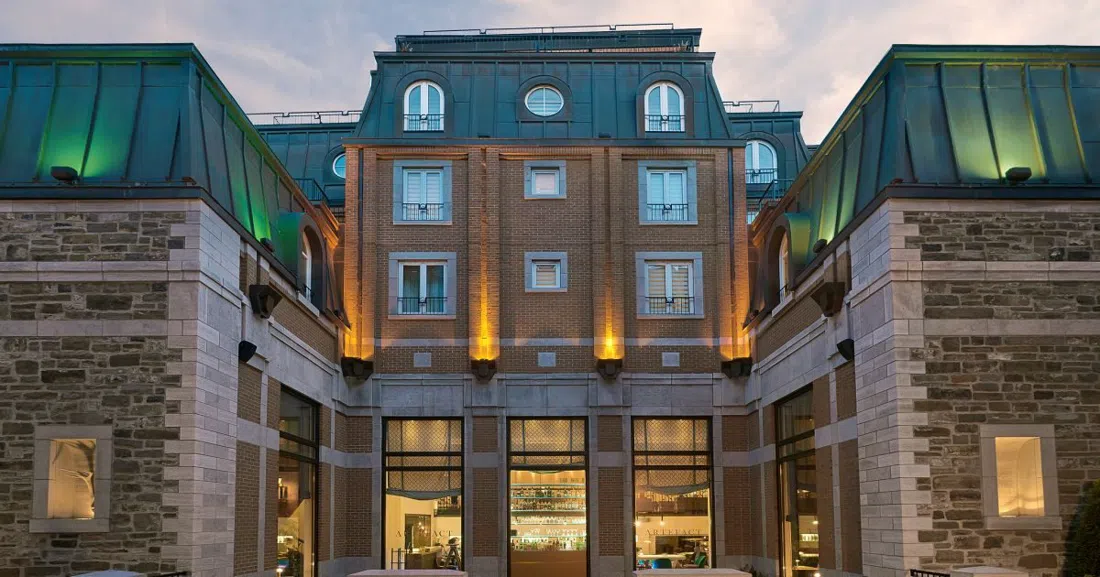
For an evening rather than a refuel, Auberge Saint-Antoine (Vieux-Port) houses the Coteau restaurant and Bar Artefact; use the current name, as Chez Muffy was renamed Coteau in summer 2025. The hotel is built over its own archaeological dig with more than 5,000 artefacts on rotating display through the public areas, so a walk through the lobby is a small free museum in its own right. Five- and seven-course tasting menus and premium room rates put it at the top of the price range, and the dining room is intimate rather than coach-friendly; private dining and small-group bookings are accepted.
Is it worth it
Yes, with a clear head about what it is. The Port of Québec is not an attraction with a turnstile and a payoff at the end; it is a place to stand, and the standing is free. If you like infrastructure, ships, tide and the logic of why a city sat down where it did, two hours here beats most ticketed sights in the quarter. If you need a guided narrative, there are guided walks that use this waterfront as their starting point, they run seven days a week, and they start from about 30 USD per person. The bookable options attached to this page carry 8,608 traveller reviews between them, with the leading walk rated 4.8 out of 5 from 5,240 of those. You never need one to see the port, and no ticket gets you closer to a ship than the public deck does.
It suits independent walkers, photographers, cyclists on the waterfront path, and families who will take a twelve-minute ferry as entertainment. It suits couples who want Petit Champlain and a long dinner. It serves groups well at the open sites (the promenade, Place des Canotiers, the ferry, the bigger brasserie) and badly at the small ones, where a party of thirty simply will not fit through a narrow crypt or a counter-service diner without splitting up. See the Quebec guide for how this corner fits the rest of the city.
Best time to go
Early morning is the port at work and the port at its emptiest: before 09:00 the deck is yours, the light comes across the water rather than into your lens, and the diner is already open. Mid-morning is the worst hour, when the funicular queues and the forecourt fills, especially in the hour after a ship berths. Late afternoon brings the light back and the groups thin out; the 16:00 river sailing lands in that window.
By day of the week, avoid building a rainy Monday around the big museum, because it is shut. Weekends put more locals on the promenade and the ferry, which is pleasant rather than a problem, though the brasserie starts earlier at 09:00 and fills faster. By season: June to September gives you the swimming basin, the marina, the river cruises and every indoor site open daily; May and October are quieter, cooler and still have the ferry, the funicular and the museum. Late January to early March swaps all of it for the ice village, which is the single reason this walk works in deep winter as well as July. November and early December are the thinnest stretch: ferry, funicular, museum and a brisk deck, and little else on the water.
Practical notes before you go
Everything named here sits within about fifteen minutes' walk of the cruise terminal, so no transport is needed beyond your own legs, the ferry at C$4.25 and the funicular at C$7. Carry coins or small notes, because the funicular does not take cards at the door, and that catches people out daily. Budget roughly C$15 for a cheap breakfast, nothing for the promenade, the viewing deck, the swimming basin or the marina edge, around C$7 to C$30 for the small historic sites and the museum, about C$50 for ninety minutes on the river, and C$50 to C$75 a head if you want a waterfront dinner. A no-spend half-day here is entirely realistic.
Allow ninety minutes for the port core: terminal forecourt, viewing deck, marina edge, ferry out and back. Add two hours for one indoor site, or a half-day if you add the river cruise. Wear something windproof whatever the forecast says, book group meals and museum entries in advance during cruise season, and check opening dates for the seasonal sites before you plan a day around them. If you want to be on the deck for the early light without a taxi, stay in the lower town within the port's own few streets. Start with a Quebec hotel search and filter to the waterfront end of the old quarter.