
Quebec
Perched on the sheer cliffs of Cap Diamant, Quebec City is defined by its dramatic topography and its uncompromising preservation of French-speaking North American culture.
Guests & rooms
The Quebec guide
An insider’s read on Quebec
PPerched on the sheer cliffs of Cap Diamant, Quebec City is defined by its dramatic topography and its uncompromising preservation of French-speaking North American culture.
Founded in 1608 by Samuel de Champlain, the city served as the capital of New France and a vital military stronghold. The historic core remains the only fortified city north of Mexico, a legacy of intense colonial rivalries. Today, Quebec City balances its deeply rooted Catholic and French heritage with a secular, design-forward energy. The local identity is fiercely proud, expressed through a sophisticated culinary scene that champions boreal ingredients and a winter-hardy lifestyle that embraces sub-zero temperatures.

PLATE IQuebec, Canada

Guides & ideas
The Quebec reading list
Hand-written guides from our editors — itineraries, the best of after dark, where to eat, and what’s genuinely worth your time.
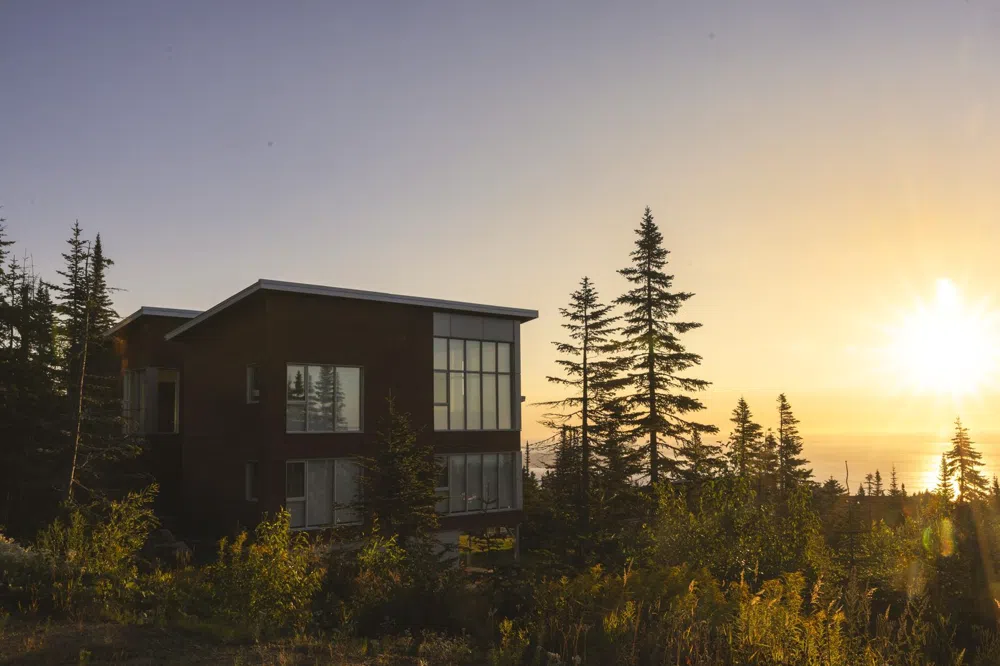
One Day in Charlevoix, Quebec City's Wild Backyard
Mountains, a gorge, whale water and a village full of galleries, all of it within ninety minutes of Quebec City, and how to fit the right pieces into a single day.

Paddle the Ice with Quebec City's Canoe Crews
The winter canoe crossing of the St. Lawrence is the oldest ritual Quebec City still practises, and for about CA$225 you can be in the boat instead of on the boardwalk.
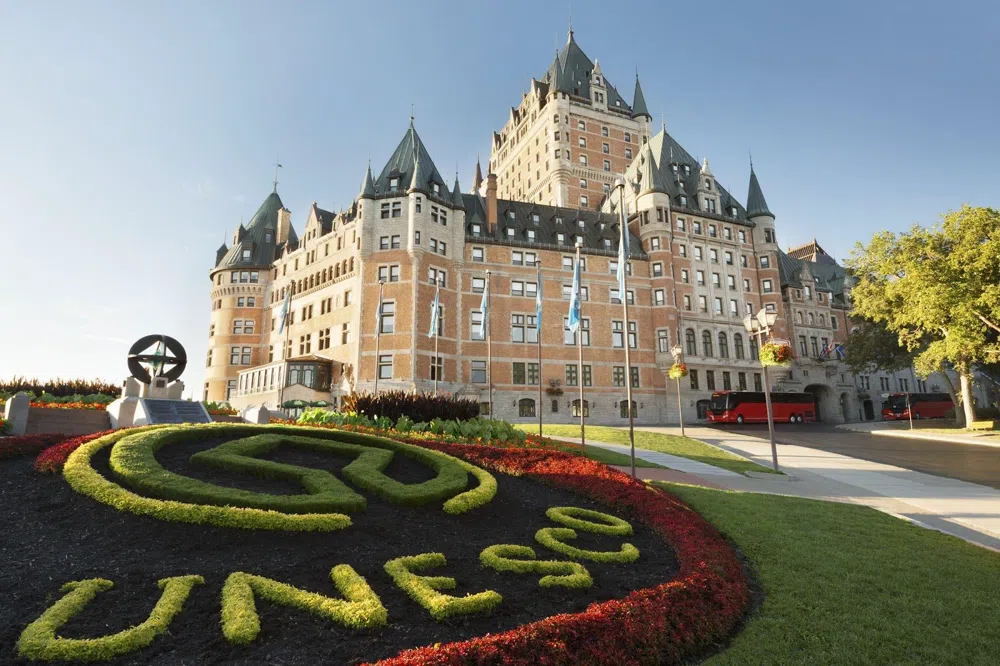
Château Frontenac: The Hotel Quebec City Can't Escape
The building on every postcard is still a working hotel with 611 rooms, a war-planning past, and neighbours in Old Quebec who tell a quieter, cheaper version of the same story.
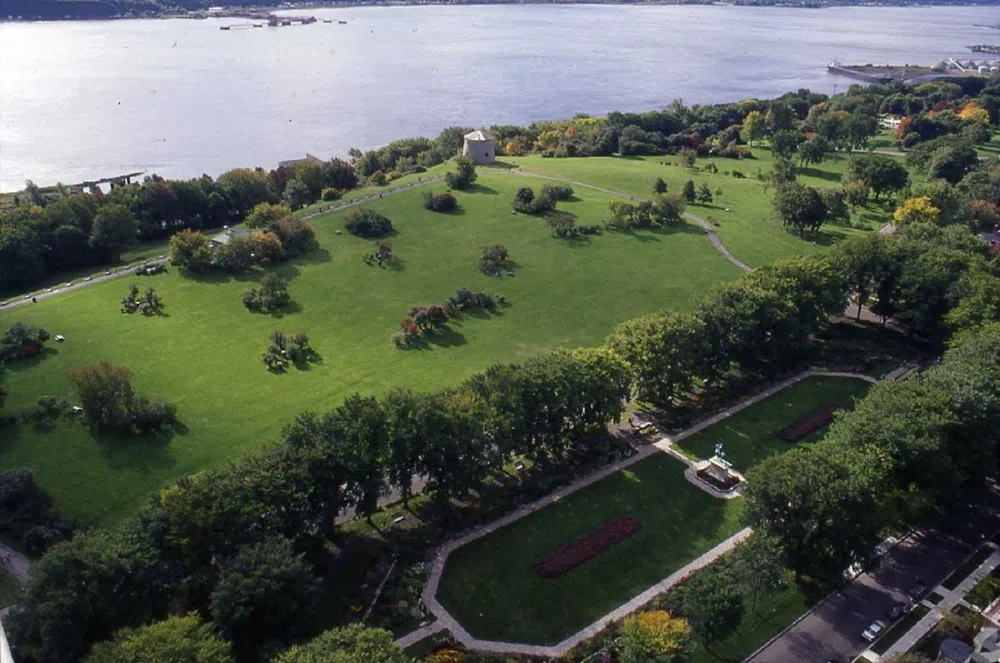
The Plains of Abraham: Quebec City's Battlefield Turned Park
How a twenty-minute battle in 1759 left Quebec City a hundred hectares of open ground it still uses every single day, from ski trails to the country's biggest winter carnival.
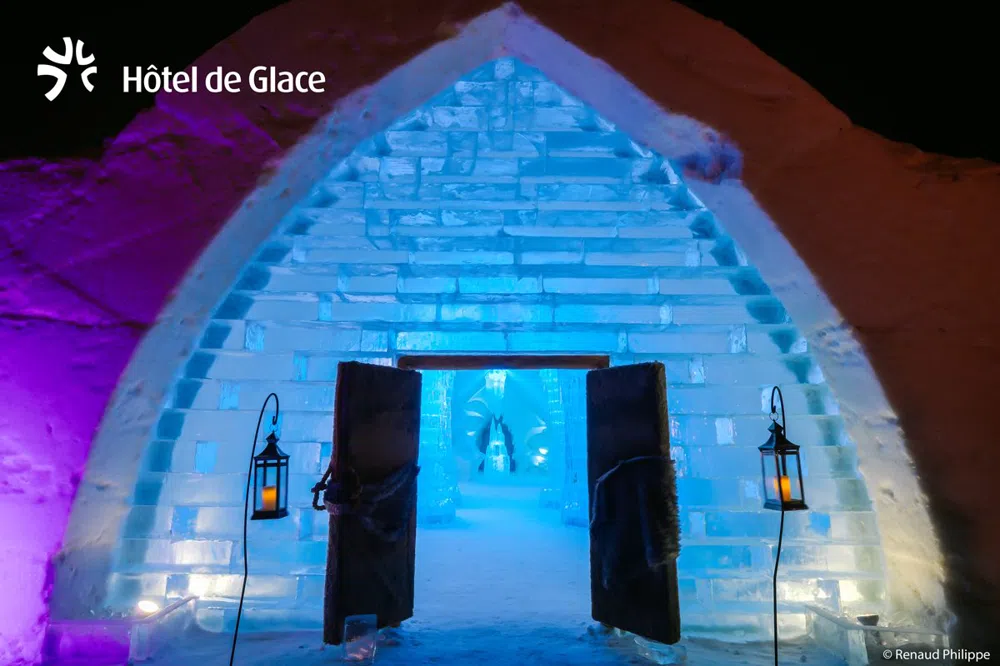
Quebec's Ice Palace: A Monument Built to Melt
Every February, Québec City builds a palace out of river ice and lets it die by April — here's how to see the whole arc, from the first block to the last puddle.
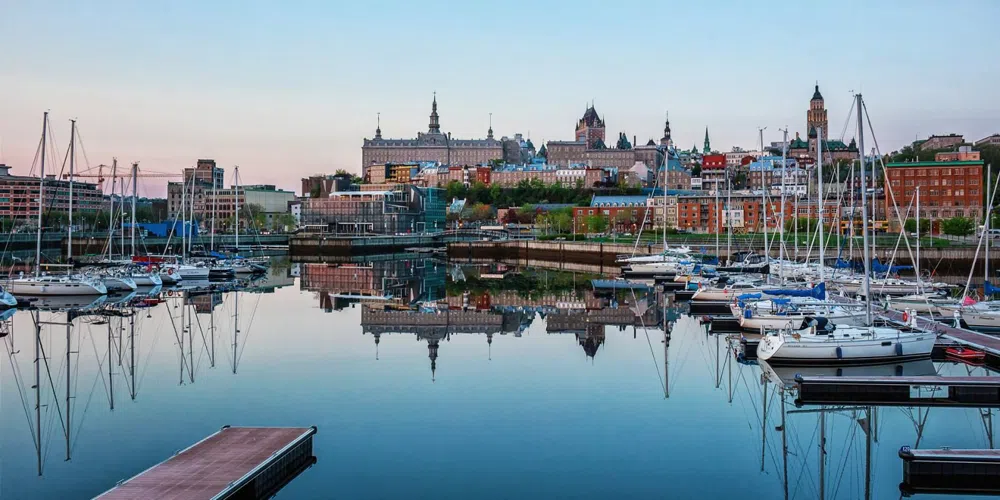
The St. Lawrence After Dark: Quebec City's Riverfront from the Old Port to the Marina
A street-level guide to Quebec City's St. Lawrence waterfront after dark — from the free terrace above the Château Frontenac to the $4.55 ferry that shows you the whole Old Port lit up from the water.
Where to base yourself
The neighborhoods
01
Vieux-Québec (Haute-Ville)
For First-time visitors who want to be steps from major landmarks. The trade-off is high tourist density, inflated restaurant prices, and steep climbs.
The historic upper town, enclosed by stone ramparts and dominated by the towering Château Frontenac. It feels like a living museum, filled with 17th-century architecture, stone plazas, and horse-drawn carriages.
Where to stay — Historic luxury hotels and traditional bed-and-breakfasts set in centuries-old buildings.
02
Vieux-Québec (Basse-Ville & Petit-Champlain)
For Photographers and history enthusiasts. The trade-off is extreme congestion during the day when cruise ships are in port.
The lower town, situated at the foot of Cap Diamant. It features narrow cobblestone streets, stone houses with colorful shutters, and the historic Place Royale.
Where to stay — High-end boutique hotels housed in restored maritime warehouses.
03
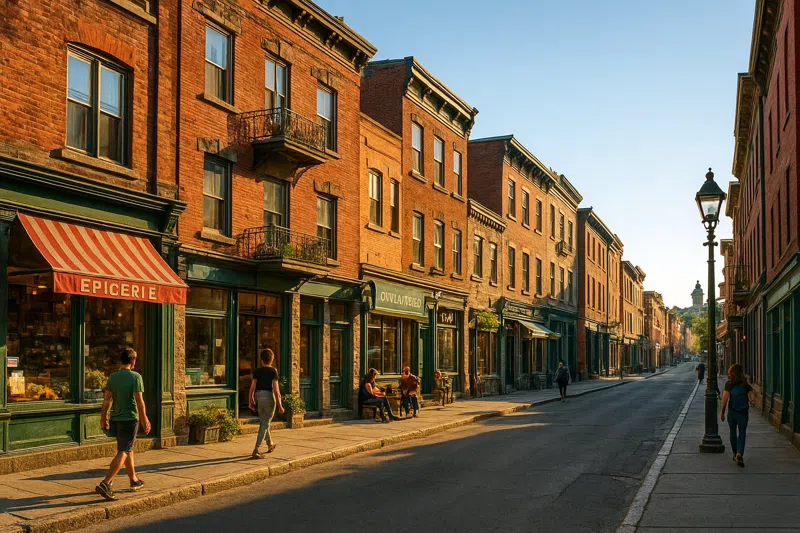
Saint-Jean-Baptiste
For Travelers seeking a local, artistic vibe away from the tourist crowds. The trade-off is the steep walk required to reach the lower town.
A bohemian, working-class neighborhood that has evolved into a creative hub. Centered along Rue Saint-Jean, it is lined with independent grocery stores, bakeries, and dive bars.
Where to stay — Quaint guesthouses and budget-friendly apartments.
04
Saint-Roch
For Foodies, craft beer lovers, and younger travelers. The trade-off is that some pockets near the highway overpasses can still feel slightly gritty.
The city's former industrial heart, now a trendy tech and design district. Centered on Rue Saint-Joseph, it features craft breweries, contemporary restaurants, and tech offices.
Where to stay — Modern, minimalist hotels and industrial-style lofts.
05
Montcalm
For Art lovers and those seeking a quieter, upscale stay. The trade-off is that it is a longer walk to the historic lower town.
The city's refined arts district, characterized by tree-lined avenues, grand Victorian homes, and a quiet, residential atmosphere.
Where to stay — Mid-range business hotels and elegant boutique properties.
06
Limoilou
For Slow travelers wanting an authentic, family-friendly look at local life. The trade-off is that it requires a bus ride to reach the historic center.
A classic residential neighborhood laid out on a grid system, famous for its brick triplexes with external spiral staircases and leafy alleyways.
Where to stay — Local apartment rentals and quiet residential guesthouses.
Book direct
Book a hotel in Quebec
Loading live availability and real-time prices…
Where to eat
Dining
Le Saint-Amour
€€€€Vieux-Québec
A legendary institution featuring a stunning indoor garden atrium, known for its classic French techniques and massive wine cellar.
Signature — Foie gras prepared in seasonal variations.
Laurie Raphaël
€€€€Vieux-Port
An avant-garde culinary journey where the chef designs highly conceptual multi-course menus based on local seasons and childhood memories.
Signature — The multi-course thematic tasting menu.
Chez Ashton
€Saint-Roch
The definitive local fast-food chain, famous for introducing poutine to the city and using fresh, daily-delivered cheese curds.
Signature — Classic poutine with extra squeaky cheese curds.
Buffet de l'Antiquaire
€Vieux-Port
A classic, no-nonsense diner serving traditional French-Canadian comfort food to locals for decades.
Signature — Tourtière (traditional meat pie) served with homemade fruit ketchup.
La Billig
€€Saint-Jean-Baptiste
A cozy neighborhood creperie serving authentic Breton-style buckwheat galettes and sweet crepes.
Signature — The 'Complète' buckwheat galette with ham, egg, and Swiss cheese.
After dark
Nightlife
1608 Bar
Vieux-Québec
Located inside the Fairmont Château Frontenac, this circular bar offers dramatic views of the St. Lawrence River and an exceptional cheese program.
Bar Sainte-Angèle
Vieux-Québec
A tiny, hidden cocktail den tucked away on a quiet side street, famous for its jazz soundtrack and custom-made drinks.
L'Atelier
Montcalm
A multi-level industrial-chic bar on Grande Allée known for its highly creative mixologists and extensive cocktail menu.
Art & history
Culture
La Citadelle de Québec
Vieux-Québec
An active military installation and the largest British-built fortress in North America, featuring a star-shaped design.
Château Frontenac
Vieux-Québec
The iconic, castle-like hotel that dominates the city's skyline, built by the Canadian Pacific Railway in the late 19th century.
Parliament Building (Hôtel du Parlement)
Montcalm
A striking Second Empire-style building that houses the National Assembly of Quebec, surrounded by gardens showcasing local flora.
Book ahead
Top-rated experiences in Quebec

Old Québec & French Canada Private History Walking Tour
from $211

Guided tour « from the bee to the bottle » with tasting - English
from $21

Private Walking Tour in Old Quebec by Tours Accolade
from $284

Quebec City: Montmorency Falls and Microbrewery eBike Tour
from $152

Guided Horse Riding in the Bay of Saint Paul Valley
from $81

VIP Agritourism Food Tour of Île d’Orléans & Montmorency Falls
from $340

Old Québec & French America Private History Walking Tour
from $211

Historic District of Old Quebec walking tour (3h)
from $288
Prices from Viator; we may earn a commission when you book — at no extra cost to you. Tours are sold and operated by Viator, the merchant of record. Ratings are collected by Viator and Tripadvisor.
Timing
When to visit
Winter
January to March brings heavy snowfall, the famous Winter Carnival, and sub-zero temperatures. It is ideal for winter sports and seeing the city at its most atmospheric, provided you pack serious thermal layers.
Spring
April and May are transitional and quiet. This is the prime season for visiting local sugar shacks (cabanes à sucre) to experience the maple harvest, though some outdoor attractions remain closed.
Summer
June to August brings warm weather, outdoor dining, and the massive Festival d'Été de Québec. Crowds are at their peak, especially when cruise ships dock in the lower town.
Autumn
September and October offer crisp air and brilliant fall foliage along the St. Lawrence River. It is an excellent time for food lovers as the local harvest comes in.
What it costs
Budgeting
Logistics
Getting around
From the airport
Jean Lesage International Airport (YQB) is located about 16 kilometers west of the city center. RTC Bus Route 80 connects the airport to the Les Saules transit hub, where you can transfer to downtown routes. Taxis and rideshares operate on a flat-rate zone system for trips into the historic center, costing in the mid-range price band.
Public transit
The Réseau de transport de la Capitale (RTC) operates an efficient bus network. The high-frequency Métrobus lines (numbered 800 to 807) are the most useful for visitors, connecting the historic center with outlying neighborhoods like Saint-Roch and Montcalm.
Passes & tickets
The RTC offers 1-day, 5-day, and unlimited weekend passes. These are highly affordable (falling into the lowest price band) and can be purchased via the RTC Nomade mobile app.
On foot
The historic center is exceptionally walkable but physically demanding. The transition between Upper Town and Lower Town requires navigating steep hills or historic staircases like the Escalier Casse-Cou. The funicular offers a mechanical alternative for a small fee.
Travel smart
Safety & etiquette
Local etiquette
- •Always greet service staff with a polite 'Bonjour' before speaking English; even a small effort to use French is highly appreciated.
- •Tipping is standard and expected at 15% to 20% in restaurants and bars, and is not included in the bill.
- •When visiting historic churches, maintain a quiet demeanor and dress respectfully.
From the ground
Practical tips
1
Check the cruise ship schedule before planning your day in Petit-Champlain to avoid the massive crowds that flood the narrow streets.
2
Pack a windproof jacket even in summer, as the breeze coming off the St. Lawrence River can be surprisingly cold.
3
Buy your transit passes on the RTC Nomade app to save time and avoid searching for physical ticket outlets.
4
If traveling in winter, invest in high-quality insulated boots; fashion boots will not withstand the sub-zero concrete and salt-covered streets.
5
Purchase local ice cider or maple spirits at the SAQ (provincial liquor stores) rather than tourist souvenir shops for better prices and selection.
Quebec FAQs
Do I need to speak French to visit?
No, but attempting basic greetings is highly appreciated. Almost everyone working in the tourism, hospitality, and retail sectors in the historic center is fully bilingual.
How do I navigate the steep hills between Upper and Lower Town?
You can take the historic Funicular railway for a small fee, which connects the Dufferin Terrace to Petit-Champlain, avoiding the steep staircases.
Is the tap water safe to drink?
Yes, tap water throughout the city is exceptionally clean, safe, and highly regulated.
When is the Winter Carnival held?
The Quebec Winter Carnival typically takes place over two weeks from late January to mid-February, featuring ice sculptures, parades, and outdoor activities.
Can I visit the Château Frontenac if I am not a guest?
Yes, you can walk through the public lobby areas, dine at its restaurants, or book a guided historical tour of the interior.